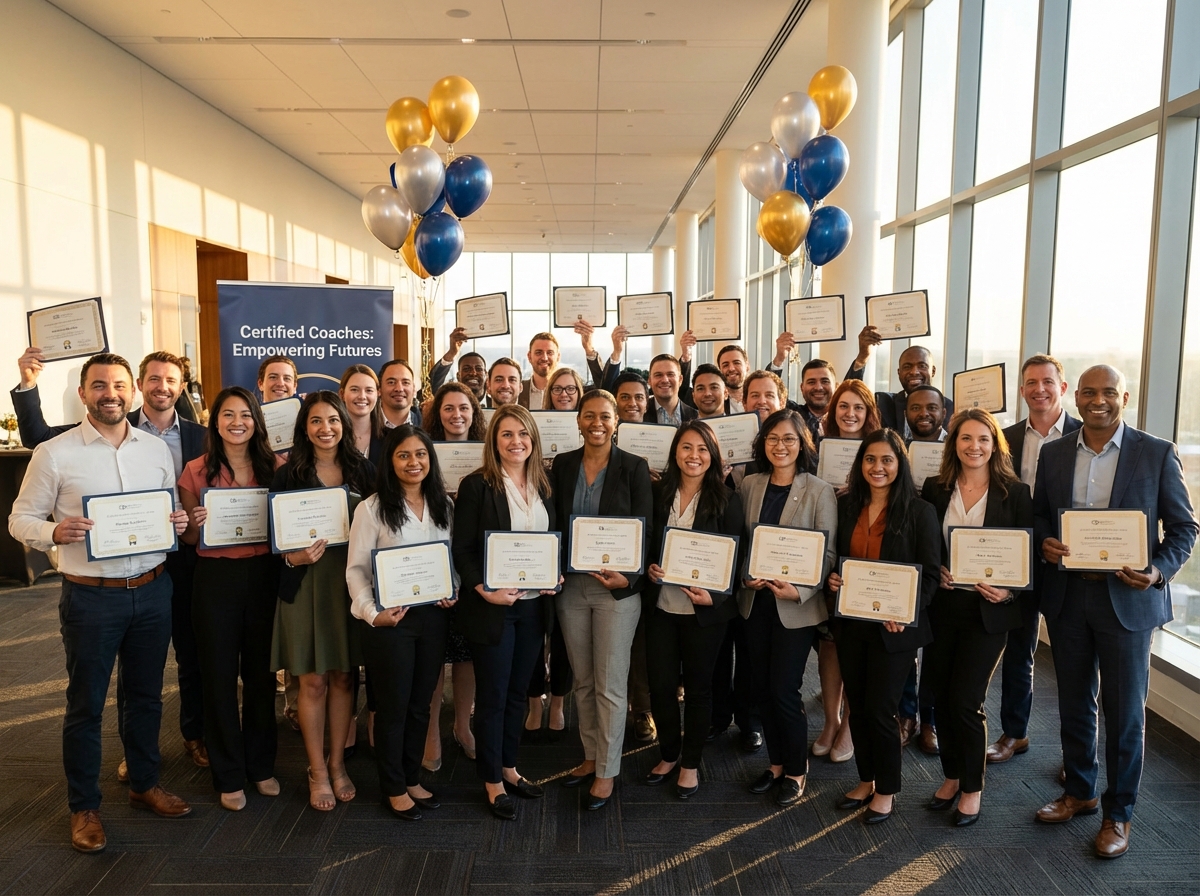
- 1.No license is required to practice life coaching in California — life coach certification is voluntary but strongly recommended
- 2.Life coaches in California earn an average of $59,112/year, 9% above the national average of $54,000
- 3.Multiple ICF-accredited programs are available in California, including UC Davis's Professional Coaching certificate, plus dozens of online options
- 4.Top coaching markets: Los Angeles, San Francisco, San Diego, San Jose, Irvine

Professional Life Coach Certification
Foundational coaching certification covering methods, tools, and industry best practices.

Life Purpose Coach Certification
Help clients uncover purpose, align actions with values, and create meaningful lives.

Confidence Coach Certification
Help clients develop unshakable self-trust and overcome self-doubt.

NLP Coach Certification
Leverage NLP techniques to reprogram the subconscious for lasting transformation.
Affiliate link · We may earn a commission at no extra cost to you
Life Coach Training & Certification Overview: California
California is the largest coaching market in the United States. With nearly 40 million residents, the world's fifth-largest economy, and cultural centers spanning technology (Silicon Valley), entertainment (Los Angeles), biotech (San Diego), and agriculture (Central Valley), the state supports virtually every coaching specialization at scale.
The Bay Area and Los Angeles are two of the most competitive — and lucrative — coaching markets in the country. Executive coaching thrives among tech leaders in Silicon Valley and startup founders in San Francisco. Wellness and mindfulness coaching is deeply embedded in California's health-conscious culture, from Santa Monica to Marin County. The entertainment industry in LA creates unique demand for performance, mindset, and career coaching.
California's high cost of living (index 142.3) is a real consideration, particularly in the Bay Area and coastal Southern California. However, the state's high coaching rates — often 30-50% above national averages — compensate for the elevated expenses. Many California coaches also serve national and international clients virtually, leveraging their California brand cachet.
$59,112/yr
Avg. Coach Salary
142.3
Cost of Living
vs. 100 national avg
$75
LLC Filing Fee
Yes (up to 13.3%)
Income Tax
Los Angeles
Top City
Do You Need a Life Coach Certification in California?
California does not require a license or certification to practice life coaching. No U.S. state currently regulates the profession. However, California is one of the most competitive coaching markets in the country, and certification is practically essential for standing out. The distinction between life coaching and therapy is particularly important in California, where the Board of Behavioral Sciences actively enforces scope-of-practice boundaries.
The International Coaching Federation (ICF) is the gold standard. In Silicon Valley and among Fortune 500 companies headquartered in California, an ICF credential (especially PCC or MCC) is frequently required for corporate coaching contracts. The density of credentialed coaches in California means uncertified coaches face stiff competition.
For detailed guidance on choosing the right credential, see our certification comparison guide.
| ICF-ACC | ICF-PCC | ICF-MCC | |
|---|---|---|---|
| Training Hours | 60+ hours | 125+ hours | 200+ hours |
| Coaching Experience | 100+ hours | 500+ hours | 2,500+ hours |
| Typical Cost | $2,000–$6,000 | $5,000–$12,000 | $10,000–$20,000 |
| Timeline | 6–12 months | 1–2 years | 3–5 years |
| Best For | New coaches | Established coaches | Master-level coaches |
Source: ICF Credentialing Requirements 2026
Professional Life Coach Certification
Foundational coaching certification covering methods, tools, and industry best practices.
- Transformational coaching methods
- Client session frameworks
- Business launch resources
Save thousands compared to traditional programs
Affiliate link · We may earn a commission at no extra cost to you
Life Coach Training: Getting Started in California
California offers one of the richest ecosystems for launching a coaching career. The state has multiple ICF-accredited programs, a massive potential client base, and cultural acceptance of coaching that exceeds most other states. The trade-off is higher competition, higher costs, and California's complex tax and regulatory environment.
New coaches should consider niching early. In a market this large, specialists outperform generalists. Whether it's tech executive coaching in the Bay Area, entertainment industry coaching in LA, or wellness coaching in San Diego, having a clear specialty and target audience is the fastest path to building a sustainable practice.
5 Steps to Life Coach Certification in California
Choose a Training Program
California offers strong local options including UC Davis's Professional Coaching for Life and Work certificate (ICF-accredited). National programs like iPEC and Lumia are also popular. See our online certification guide.
Complete Your Training
Finish at least 60 hours for ICF-ACC or 125+ hours for ICF-PCC. In California's competitive market, aim for PCC level when possible to stand out.
Register Your Business in California
File an LLC with the California Secretary of State ($75 filing fee). Note: California imposes an $800/year minimum franchise tax on all LLCs, regardless of income. First-year LLCs are exempt from this fee.
Get Liability Insurance
Professional liability insurance typically costs $200–$500/year. This is essential in California's litigious business environment.
Find Your First Clients
Leverage your local market — LA, SF, San Diego, or wherever you're based. LinkedIn is highly effective in California's professional culture. Local ICF chapters, industry meetups, and wellness events are also strong channels.
Life Coach Salary and Earning Potential in California
Life coaches in California earn an average of $59,112/year, according to ZipRecruiter data. This is approximately 9% above the national average of $54,000. However, California's cost of living index of 142.3 means your purchasing power is actually below the national average unless you're earning well above the state average.
The earning ceiling in California is among the highest in the country. Silicon Valley executive coaches regularly charge $400–$800 per session, and top coaches can earn $200,000+ annually. Entertainment industry coaches in LA command similar premium rates. Even in more moderate markets like Sacramento and San Diego, coaching rates run 20-40% above national averages.
California's progressive state income tax (up to 13.3% at the highest bracket) means self-employed coaches face a significant tax burden. Strategic tax planning with a qualified CPA is essential for California coaches.
For a comprehensive salary breakdown, see our life coach salary guide.
Source: ZipRecruiter, 2025
Setting Up Your Coaching Business in California
California has a more complex business environment than most states. While the LLC filing fee is a modest $75, the state's $800/year minimum franchise tax applies to all LLCs regardless of income (first-year LLCs are currently exempt). This is a significant consideration for new coaches.
LLC Formation: File with the California Secretary of State. The filing fee is $75. California requires an annual Statement of Information ($20 filing fee) and imposes the $800/year minimum franchise tax beginning in the second year.
Business Insurance: Professional liability (errors and omissions) insurance is strongly recommended. Typical cost: $200–$500/year. California's litigious culture makes this particularly important.
Taxes: California has the highest state income tax rate in the nation (up to 13.3%). Self-employed coaches must make quarterly estimated tax payments. California also requires an LLC fee for businesses with California-source income above $250,000. Work with a California-licensed CPA to optimize your tax strategy.
For step-by-step guidance, see our coaching business startup guide.
| Sole Proprietorship | LLC in California | |
|---|---|---|
| Formation Cost | $0–$50 (DBA only) | $75 filing fee |
| Annual Fees | None | $800/year min. franchise tax + $20 SOI |
| Personal Liability | Unlimited personal liability | Limited liability protection |
| Taxes | Personal tax return only | Pass-through + $800 min. franchise tax |
| Credibility | Informal | More professional |
| Best For | Testing the waters | Serious coaching practice |
Source: California Secretary of State / Franchise Tax Board, 2026
Traditional ICF Programs
- Cost: $3,000–$15,000
- Duration: 6–12 months
- Schedule: Fixed class times
- Location: In-person or scheduled live
Transformation Academy
- Cost: $197
- Duration: Self-paced
- Schedule: Start anytime
- Location: 100% online
Affiliate link · We may earn a commission at no extra cost to you
Life Coach Training Programs in California
California has more coaching training options than virtually any other state. UC Davis Continuing and Professional Education offers a Professional Coaching for Life and Work Certificate Program accredited by the ICF, offered twice yearly in five-month cohorts. This university-affiliated program carries strong academic credibility.
Human Potential Institute offers Health Coach and Life Coach training. National programs like iPEC and Lumia Coaching are popular among California coaches as well.
For a complete comparison of online options, see our online certification programs guide.
In-Demand Coaching Specializations in California
Executive coaching dominates in Silicon Valley and the Bay Area, where tech leaders, startup founders, and venture-backed CEOs invest heavily in coaching. Career coaching is in strong demand statewide, particularly in tech, entertainment, and healthcare. Health and wellness coaching is deeply embedded in California culture, from yoga studios to corporate wellness programs.
LA's entertainment industry creates a unique market for mindset and performance coaching among actors, musicians, and media professionals. Business coaching thrives in San Diego's biotech corridor and Sacramento's government sector. Life purpose coaching resonates across California's lifestyle-driven population.
Explore all coaching specializations to find your niche.
Life Coach Training by City in California
Explore coaching markets across California
How to Become a Life Coach in Los Angeles, California
The second-largest city in the United States, Los Angeles anchors a metro area of nearly 13 million people and represents one of the largest coaching markets in the world. Its entertainment, technology, healthcare, and aerospace industries create demand for every coaching specialty, from executive and career coaching to wellness and creative performance coaching.
Coaching Market
Los Angeles is among the most dynamic coaching markets in the United States, driven by the sheer scale and diversity of its economy. The metro area's population of approximately 12.9 million encompasses industries that span entertainment, technology, healthcare, aerospace, international trade, and professional services. Each of these sectors generates distinct coaching demand that supports hundreds of active coaches.
The entertainment industry, centered on Hollywood, creates demand for performance coaching, creative career coaching, and executive coaching for studio and production company leaders. Coaches who specialize in helping actors, writers, producers, and musicians navigate the entertainment business occupy a niche that exists nowhere else in the country at this scale. The technology sector, growing rapidly in Silicon Beach (Playa Vista, Santa Monica, Venice) with companies like Google, Snap, Hulu, and numerous startups, drives demand for leadership coaching among tech executives and career coaching for professionals in the startup ecosystem.
Healthcare systems including Cedars-Sinai, UCLA Health, Kaiser Permanente, and Providence employ hundreds of thousands of workers across the region, creating a robust healthcare leadership coaching market. The aerospace sector, led by SpaceX in Hawthorne, Northrop Grumman, and Raytheon, adds defense and engineering leadership coaching demand. The Port of Los Angeles and Port of Long Beach together form the largest port complex in the Western Hemisphere, supporting logistics and international trade professionals who seek executive coaching.
The Noomii coaching directory lists over 330 life coaches in Los Angeles alone, with session rates typically ranging from $100 to $350 per hour. Prominent coaching firms include Ignite Your Potential (described as the number one executive coaches in LA), Chris Tooker Training (C-suite focused), Blair Wellness Group (Beverly Hills and Irvine), and A Path That Fits (career coaching). Coaches in Los Angeles serve clients throughout Santa Monica, Beverly Hills, Pasadena, Burbank, Long Beach, Glendale, and the wider Los Angeles Basin.
Training Programs
- Co-Active Training Institute (CTI) — ICF Level 2 accredited
- iPEC — ICF-accredited, online format
- College of Executive Coaching — Graduate-level coaching
- Certified Life Coach Institute — Certification training
- UCLA Extension — University program
Los Angeles is one of the richest cities in the world for coaching training, with multiple ICF-accredited programs operating locally and the ICF Los Angeles chapter providing a robust support ecosystem. ICF Los Angeles (ICFLA) is one of the largest ICF chapters in the country with a membership base of more than 350 coaches, providing support, education, training, and resources to practicing and aspiring coaches.
iPEC's ICF-accredited coach training has a strong following among LA coaches, particularly for those entering executive and leadership coaching. The Co-Active Training Institute (CTI), headquartered in San Rafael, California, frequently offers intensives and workshops in the Southern California area. CTI has trained over 65,000 leaders worldwide and is called the gold standard of coaching by the Institute of Coaching, a Harvard Medical School affiliate.
The College of Executive Coaching, an ICF-accredited program based in California, offers a Certified Personal and Executive Coach program with both online and intensive options. This program is particularly relevant for LA coaches targeting the entertainment and corporate executive market. The Certified Life Coach Institute offers a three-day virtual ICF-accredited training format that accommodates the busy schedules of LA professionals.
University resources include UCLA Extension's professional development courses in leadership and management, USC's Marshall School of Business executive education programs, and Pepperdine's Graduate School of Education and Psychology, which offers coaching-adjacent programs in organizational leadership. Loyola Marymount University and Claremont Graduate University provide programs in organizational behavior and positive psychology that complement coaching credentials. Coaches in Santa Monica, Beverly Hills, Pasadena, Burbank, and Long Beach access the same training ecosystem, with Los Angeles's extensive freeway network and Metro system connecting the metro area.
Networking & Community
- ICF Los Angeles — Professional coaching network
- Los Angeles Area Chamber of Commerce — Business networking
- Hollywood Chamber of Commerce — Business networking
- SHRM Chapter — HR professional network
ICF Los Angeles (ICFLA) is the cornerstone of the city's coaching network, with over 350 members and regular events that include educational workshops, peer coaching exchanges, and networking mixers. The chapter's size and activity level make it one of the strongest coaching communities in the country, with members spanning executive coaching, life coaching, wellness coaching, career coaching, and creative performance coaching. ICFLA also participates in annual Coast to Coast pro bono coaching challenges, partnering with other ICF chapters.
The Los Angeles Area Chamber of Commerce, the largest business association in Los Angeles County, provides networking with the city's diverse business community. The chamber hosts regular events, policy discussions, and leadership programs that connect coaches with corporate decision-makers. The Hollywood Chamber of Commerce provides networking specific to the entertainment industry, while the LA County Economic Development Corporation connects coaches with broader economic development initiatives.
Industry-specific networking is exceptionally rich in Los Angeles. The LA chapter of the Society for Human Resource Management (SHRM) connects coaches with HR leaders who purchase coaching services. Tech industry meetups in Silicon Beach, entertainment industry guilds and associations, and healthcare professional organizations each provide access to coaching clients in their respective sectors. Women's business organizations including the National Association of Women Business Owners (NAWBO) and the LA chapter of Ellevate Network provide networking for female coaches and those serving women clients.
The sheer size of the Los Angeles market means that coaches can specialize deeply. Networking groups exist for coaches serving specific niches: entertainment industry coaching, tech executive coaching, multicultural coaching, LGBTQ+ coaching, and wellness coaching. Coaches in Santa Monica, Beverly Hills, Pasadena, Long Beach, and Burbank can access this full networking ecosystem while maintaining local connections in their immediate communities.
Business Considerations
Session Rates
$150–$400/hr (exec: $500–$1,000)
Office Rent
A: $57.47, B: $43.40, C: $34.92/sq ft
Coworking
$200–$400/mo
Starting a coaching practice in California involves higher costs and more complexity than most other states. California LLC formation requires a $75 filing fee plus a $20 annual Statement of Information fee, but the most significant cost is California's $800 annual franchise tax, payable regardless of revenue. This makes California one of the most expensive states for new business formation, and coaches should budget for this recurring cost from the outset. California's state income tax is progressive, with rates reaching over 13 percent for the highest earners.
Office space in Los Angeles varies dramatically by neighborhood. According to CommercialCafe, the average office rent in Los Angeles is $48.72 per square foot, with Class A space averaging $57.47, Class B at $43.40, and Class C at $34.92 per square foot. Downtown LA Class A rents reached $49.22 per square foot by year-end 2025. The range spans from $15.60 per square foot in less desirable locations to $300 per square foot in premium buildings. A 200-square-foot coaching office in a Class B building would cost approximately $720 per month.
Coworking spaces are abundant throughout Los Angeles, with options ranging from national chains (WeWork, Regus, Industrious) to local operators in every neighborhood. Santa Monica, West Hollywood, Downtown LA, and Pasadena all have robust coworking ecosystems with hot desk memberships starting at $200 to $400 per month and private offices from $600 to $1,500 per month depending on location and amenities.
California's cost of living index of 142.3 is the highest among states in this guide, and Los Angeles is above the statewide average for housing and transportation. Coaching session rates in LA reflect this cost structure, typically ranging from $150 to $400 per hour for individual coaching, with executive coaching packages reaching $500 to $1,000 per hour for C-suite engagements. Entertainment industry coaching can command premium rates due to high-profile clientele. Despite the high overhead, Los Angeles's massive population and wealthy client base support hundreds of full-time coaching practices. Coaches who are strategic about their office setup, using home offices for virtual sessions and premium coworking spaces for in-person meetings, can manage costs while maintaining a professional presence.
Life Coach Training Locations in California
How to Become a Life Coach in Los Angeles, California
The second-largest city in the United States, Los Angeles anchors a metro area of nearly 13 million people and represents one of the largest coaching markets in the world. Its entertainment, technology, healthcare, and aerospace industries create demand for every coaching specialty, from executive and career coaching to wellness and creative performance coaching.
Coaching Market — Los Angeles, California
Los Angeles is among the most dynamic coaching markets in the United States, driven by the sheer scale and diversity of its economy. The metro area's population of approximately 12.9 million encompasses industries that span entertainment, technology, healthcare, aerospace, international trade, and professional services. Each of these sectors generates distinct coaching demand that supports hundreds of active coaches. The entertainment industry, centered on Hollywood, creates demand for performance coaching, creative career coaching, and executive coaching for studio and production company leaders. Coaches who specialize in helping actors, writers, producers, and musicians navigate the entertainment business occupy a niche that exists nowhere else in the country at this scale. The technology sector, growing rapidly in Silicon Beach (Playa Vista, Santa Monica, Venice) with companies like Google, Snap, Hulu, and numerous startups, drives demand for leadership coaching among tech executives and career coaching for professionals in the startup ecosystem. Healthcare systems including Cedars-Sinai, UCLA Health, Kaiser Permanente, and Providence employ hundreds of thousands of workers across the region, creating a robust healthcare leadership coaching market. The aerospace sector, led by SpaceX in Hawthorne, Northrop Grumman, and Raytheon, adds defense and engineering leadership coaching demand. The Port of Los Angeles and Port of Long Beach together form the largest port complex in the Western Hemisphere, supporting logistics and international trade professionals who seek executive coaching. The Noomii coaching directory lists over 330 life coaches in Los Angeles alone, with session rates typically ranging from $100 to $350 per hour. Prominent coaching firms include Ignite Your Potential (described as the number one executive coaches in LA), Chris Tooker Training (C-suite focused), Blair Wellness Group (Beverly Hills and Irvine), and A Path That Fits (career coaching). Coaches in Los Angeles serve clients throughout Santa Monica, Beverly Hills, Pasadena, Burbank, Long Beach, Glendale, and the wider Los Angeles Basin.
Training Programs — Los Angeles, California
Los Angeles is one of the richest cities in the world for coaching training, with multiple ICF-accredited programs operating locally and the <a href="https://www.icfla.org/" rel="noopener" target="_blank">ICF Los Angeles</a> chapter providing a robust support ecosystem. ICF Los Angeles (ICFLA) is one of the largest ICF chapters in the country with a membership base of more than 350 coaches, providing support, education, training, and resources to practicing and aspiring coaches. iPEC's ICF-accredited coach training has a strong following among LA coaches, particularly for those entering executive and leadership coaching. The <a href="https://coactive.com/" rel="noopener" target="_blank">Co-Active Training Institute</a> (CTI), headquartered in San Rafael, California, frequently offers intensives and workshops in the Southern California area. CTI has trained over 65,000 leaders worldwide and is called the gold standard of coaching by the Institute of Coaching, a Harvard Medical School affiliate. The <a href="https://www.executivecoachcollege.com/" rel="noopener" target="_blank">College of Executive Coaching</a>, an ICF-accredited program based in California, offers a Certified Personal and Executive Coach program with both online and intensive options. This program is particularly relevant for LA coaches targeting the entertainment and corporate executive market. The <a href="https://www.certifiedlifecoachinstitute.com/" rel="noopener" target="_blank">Certified Life Coach Institute</a> offers a three-day virtual ICF-accredited training format that accommodates the busy schedules of LA professionals. University resources include UCLA Extension's professional development courses in leadership and management, USC's Marshall School of Business executive education programs, and Pepperdine's Graduate School of Education and Psychology, which offers coaching-adjacent programs in organizational leadership. Loyola Marymount University and Claremont Graduate University provide programs in organizational behavior and positive psychology that complement coaching credentials. Coaches in Santa Monica, Beverly Hills, Pasadena, Burbank, and Long Beach access the same training ecosystem, with Los Angeles's extensive freeway network and Metro system connecting the metro area.
Networking & Community — Los Angeles, California
ICF Los Angeles (ICFLA) is the cornerstone of the city's coaching network, with over 350 members and regular events that include educational workshops, peer coaching exchanges, and networking mixers. The chapter's size and activity level make it one of the strongest coaching communities in the country, with members spanning executive coaching, life coaching, wellness coaching, career coaching, and creative performance coaching. ICFLA also participates in annual Coast to Coast pro bono coaching challenges, partnering with other ICF chapters. The Los Angeles Area Chamber of Commerce, the largest business association in Los Angeles County, provides networking with the city's diverse business community. The chamber hosts regular events, policy discussions, and leadership programs that connect coaches with corporate decision-makers. The Hollywood Chamber of Commerce provides networking specific to the entertainment industry, while the LA County Economic Development Corporation connects coaches with broader economic development initiatives. Industry-specific networking is exceptionally rich in Los Angeles. The LA chapter of the Society for Human Resource Management (SHRM) connects coaches with HR leaders who purchase coaching services. Tech industry meetups in Silicon Beach, entertainment industry guilds and associations, and healthcare professional organizations each provide access to coaching clients in their respective sectors. Women's business organizations including the National Association of Women Business Owners (NAWBO) and the LA chapter of Ellevate Network provide networking for female coaches and those serving women clients. The sheer size of the Los Angeles market means that coaches can specialize deeply. Networking groups exist for coaches serving specific niches: entertainment industry coaching, tech executive coaching, multicultural coaching, LGBTQ+ coaching, and wellness coaching. Coaches in Santa Monica, Beverly Hills, Pasadena, Long Beach, and Burbank can access this full networking ecosystem while maintaining local connections in their immediate communities.
Business Considerations — Los Angeles, California
Starting a coaching practice in California involves higher costs and more complexity than most other states. California LLC formation requires a $75 filing fee plus a $20 annual Statement of Information fee, but the most significant cost is California's $800 annual franchise tax, payable regardless of revenue. This makes California one of the most expensive states for new business formation, and coaches should budget for this recurring cost from the outset. California's state income tax is progressive, with rates reaching over 13 percent for the highest earners. Office space in Los Angeles varies dramatically by neighborhood. According to CommercialCafe, the average office rent in Los Angeles is $48.72 per square foot, with Class A space averaging $57.47, Class B at $43.40, and Class C at $34.92 per square foot. Downtown LA Class A rents reached $49.22 per square foot by year-end 2025. The range spans from $15.60 per square foot in less desirable locations to $300 per square foot in premium buildings. A 200-square-foot coaching office in a Class B building would cost approximately $720 per month. Coworking spaces are abundant throughout Los Angeles, with options ranging from national chains (WeWork, Regus, Industrious) to local operators in every neighborhood. Santa Monica, West Hollywood, Downtown LA, and Pasadena all have robust coworking ecosystems with hot desk memberships starting at $200 to $400 per month and private offices from $600 to $1,500 per month depending on location and amenities. California's cost of living index of 142.3 is the highest among states in this guide, and Los Angeles is above the statewide average for housing and transportation. Coaching session rates in LA reflect this cost structure, typically ranging from $150 to $400 per hour for individual coaching, with executive coaching packages reaching $500 to $1,000 per hour for C-suite engagements. Entertainment industry coaching can command premium rates due to high-profile clientele. Despite the high overhead, Los Angeles's massive population and wealthy client base support hundreds of full-time coaching practices. Coaches who are strategic about their office setup, using home offices for virtual sessions and premium coworking spaces for in-person meetings, can manage costs while maintaining a professional presence.
How to Become a Life Coach in San Diego, California
California's second-largest city and home to the largest military concentration in the world, San Diego combines defense, biotechnology, healthcare, and tourism into a coaching market of 1.39 million residents. The city's year-round climate, research universities, and quality of life attract professionals who invest in personal and professional development.
Coaching Market — San Diego, California
San Diego's coaching market benefits from the city's diverse economy and its reputation as one of the most desirable places to live in the United States. The region's major industries each generate distinct coaching demand. The military presence, anchored by Naval Base San Diego, Marine Corps Base Camp Pendleton, and Marine Corps Air Station Miramar, is the largest in the world and creates substantial demand for military transition coaching, leadership development for military officers, and family resilience coaching for military spouses. The biotechnology and life sciences sector, centered in the Torrey Pines and Sorrento Valley corridors, employs thousands of scientists, researchers, and executives at companies like Illumina, Qualcomm, and dozens of biotech startups. Leadership coaching for scientists transitioning into management roles and career coaching for researchers navigating the startup-to-acquisition pipeline are active niches. The University of California San Diego (UCSD), the region's largest employer with over 38,700 employees, drives academic and research coaching demand. Healthcare systems including Sharp HealthCare (over 18,700 employees), Scripps Health (over 12,300), and Kaiser Permanente create a robust healthcare leadership coaching market. The County of San Diego (over 18,600 employees) and San Diego Unified School District (nearly 13,000) add public-sector coaching demand. Professional, scientific, and technical services employ about 92,500 workers, representing the second-largest employment sector and a primary source of coaching clients. Coaches in San Diego serve clients throughout the county, including Carlsbad, Encinitas, La Jolla, Chula Vista, Escondido, Oceanside, and El Cajon. The city's tourism industry (over 67,500 hospitality employees) creates entrepreneurial coaching opportunities among hotel, restaurant, and tour operator owners. San Diego's strong wellness culture and outdoor lifestyle attract coaches specializing in wellness, mindfulness, and holistic approaches.
Training Programs — San Diego, California
San Diego coaches benefit from California's rich coaching training ecosystem, though the city has fewer locally headquartered programs than Los Angeles or San Francisco. iPEC's ICF-accredited program has a following among San Diego coaches, particularly those entering the executive coaching market. The Co-Active Training Institute (CTI), based in San Rafael, offers programs accessible online with occasional Southern California intensives. The College of Executive Coaching, an ICF-accredited program based in California, provides specialized training for executive and organizational coaching that appeals to San Diego coaches targeting the biotech, military, and healthcare leadership markets. The Human Potential Institute, based in California, offers ICF-accredited training specifically focused on positive psychology and human potential coaching, which aligns with San Diego's wellness-oriented culture. UCSD Extension offers professional development courses in leadership, project management, and organizational behavior that complement coaching certification. The University of San Diego's School of Leadership and Education Sciences provides graduate programs in leadership and counseling. San Diego State University's College of Education offers counseling programs that some coaches pursue as complementary credentials. Point Loma Nazarene University and National University provide additional educational resources. Coaches in Carlsbad, La Jolla, Encinitas, and Oceanside access the same training programs as San Diego city residents. The region's military community creates specific demand for coaches trained in military transition and veteran-focused coaching methodologies, which several specialized online programs address.
Networking & Community — San Diego, California
San Diego does not have a dedicated ICF chapter within the city limits, but coaches connect with the ICF Los Angeles chapter and participate in ICF's global virtual networking. Some San Diego coaches have organized local meetup groups and peer coaching circles that function as informal chapter alternatives. The San Diego Regional Chamber of Commerce is the primary business networking organization, hosting regular events, leadership forums, and industry-specific programs. The chamber's business community includes defense contractors, biotech companies, healthcare systems, and professional service firms, all of which represent coaching client segments. The San Diego Regional Economic Development Corporation (EDC) connects professionals around workforce development and talent attraction initiatives. BIOCOM California, the life sciences trade association headquartered in San Diego, provides networking specific to the biotech and pharmaceutical industry. Coaches who attend BIOCOM events connect with biotech executives and scientists who represent premium coaching prospects. CONNECT, San Diego's innovation accelerator, and the San Diego Venture Group provide networking with startup founders and technology executives. Military-affiliated networking is uniquely strong in San Diego. The San Diego Military Advisory Council (SDMAC), veteran service organizations, and the Armed Services YMCA connect coaches with the military community. The San Diego chapter of SHRM provides access to HR leaders who purchase coaching services. The Athena International women's leadership organization, headquartered in San Diego, and NAWBO San Diego provide networking for women professionals. Coaches serving North County (Carlsbad, Encinitas, Oceanside) can access the Carlsbad Chamber of Commerce and the San Diego North Economic Development Council for more localized networking.
Business Considerations — San Diego, California
Starting a coaching practice in San Diego involves California's standard LLC costs: $75 filing fee, $20 annual Statement of Information, and the $800 annual franchise tax that applies regardless of revenue. California's progressive income tax rates add to the operating cost burden, making careful financial planning essential for new coaching practices. Office space in San Diego is expensive but generally less so than Los Angeles or San Francisco. According to CommercialCafe, average office rent rested at $44.35 per square foot in 2024, with Class A space averaging $52.46, Class B at $35.05, and Class C at $36.33 per square foot. The office vacancy rate of 21.06 percent in 2024 gives coaches negotiating leverage, and 2,268,361 square feet of new office space is expected in 2025. A 200-square-foot coaching office in a Class B building would cost approximately $585 per month. Coworking spaces in San Diego include national chains and local operators, with options in downtown, the Gaslamp Quarter, Little Italy, La Jolla, and suburban locations. Hot desk memberships typically start at $200 to $350 per month, with private offices from $500 to $1,200 per month depending on location. La Jolla and Del Mar command premium rates, while East County and South Bay offer more affordable alternatives. Coaching session rates in San Diego typically range from $150 to $350 per hour for individual coaching, with executive coaching for biotech and defense sector leaders reaching $400 to $700 per hour. Military transition coaching sometimes uses a lower fee structure or sliding scale, recognizing the economic realities of transitioning service members. Compared to Los Angeles ($48.72/sq ft office rent) and San Francisco ($64/sq ft), San Diego offers a more manageable cost of doing business while maintaining access to a large, affluent, and diverse client base. The city's quality of life attracts coaches who relocate from higher-cost California metros, creating a sophisticated coaching community.
How to Become a Life Coach in San Francisco, California
The epicenter of the global technology industry, San Francisco anchors a Bay Area metro of 4.6 million people and represents one of the highest-revenue coaching markets in the world. Its concentration of tech companies, venture capital firms, and startup founders creates exceptional demand for executive coaching, leadership development, and career transition coaching.
Coaching Market — San Francisco, California
San Francisco's coaching market is unmatched in its concentration of high-value coaching clients. The city and broader Bay Area serve as the global headquarters of the technology industry, home to companies including Salesforce, Meta, Uber, Airbnb, Twitter (X), Stripe, and thousands of startups. Venture capital firms on Sand Hill Road and throughout the city fund new companies daily, creating a continuous pipeline of founders and executives who invest in coaching. Career coaches in San Francisco often specialize in specific industries like tech, consulting, or finance, allowing them to provide targeted advice for the city's dominant sectors. The executive coaching market in San Francisco is particularly dense. Multiple firms specialize in this niche, including the Leadership Coach Group, Bay Area Executive Coaching, and John Mattone Global (which maintains a San Francisco practice). These firms serve C-suite executives, vice presidents, and senior directors at technology companies navigating rapid growth, organizational change, and the transition from startup to enterprise scale. The Bay Area's tech layoffs cycle creates periodic surges in career transition coaching demand, as thousands of professionals from companies like Meta, Google, and Salesforce seek coaches to help navigate job searches and career pivots. Conversely, during hiring booms, leadership coaching demand spikes as newly promoted managers need support. Financial services, healthcare (UCSF Medical Center, Kaiser Permanente), and professional services add non-tech coaching demand. Coaches in San Francisco serve clients throughout the Bay Area, including Oakland, Berkeley, Palo Alto, Mountain View, San Jose, Walnut Creek, and Marin County. The <a href="https://sfbayareacoaches.org/" rel="noopener" target="_blank">ICF San Francisco Bay Area Coaches</a> (SFBAC) chapter reports reaching 4,100-plus unique monthly visitors and 1,400-plus regional members, with a community of greater than 850 talented coaches. This density of coaches creates competition but also signals a mature market with established demand and professional standards.
Training Programs — San Francisco, California
San Francisco and the Bay Area represent the birthplace of several foundational coaching methodologies and host some of the most respected training programs in the world. The Co-Active Training Institute (CTI), headquartered in San Rafael just across the Golden Gate Bridge, is the world's largest in-person coach training and leadership development organization, having trained over 65,000 leaders and 150,000-plus graduates. CTI's programs include Fundamentals of Coaching (4 days online, 18.75 ICF CCE units), the Complete Professional Coaching Package (5 months online, 104 ICF CCE units), and the Professional Coach Certification Program (6 months, 104 ICF CCE units plus 200 coaching hours). The Institute of Coaching, a Harvard Medical School affiliate, has called the Co-Active Model the gold standard based on evidence-based scientific research. The Insight Coaching Community offers an ICF-accredited CCE Accelerate Program. The College of Executive Coaching's ICF-accredited programs appeal to Bay Area coaches in the executive niche. The Human Potential Institute, based in California, offers ICF-accredited training focused on positive psychology and human potential. Stanford University's Graduate School of Business and School of Education offer executive education and leadership development programs that many Bay Area coaches pursue as complementary credentials. UC Berkeley's Haas School of Business provides executive education, and the Wright Institute in Berkeley offers doctoral programs in psychology that appeal to coaches seeking clinical depth. The California Institute of Integral Studies (CIIS) in San Francisco offers programs in transformative leadership and coaching that integrate contemplative practices. The SFBAC chapter's Become a Coach resources specifically guide aspiring coaches toward accredited programs, creating a structured pathway for Bay Area professionals entering the field.
Networking & Community — San Francisco, California
ICF San Francisco Bay Area Coaches (SFBAC) is one of the largest ICF chapters in the world, with 1,400-plus regional members and a community of over 850 active coaches. The chapter reaches 4,100-plus unique monthly visitors through its online platform and hosts regular events, programs, and peer coaching exchanges. SFBAC's size and activity level make it the single most important networking resource for Bay Area coaches, providing both peer connections and visibility to potential clients searching for coaches through the chapter directory. SFBAC's member coaches span every coaching specialty, from life and wellness coaching to leadership and executive coaching, making the chapter's events useful for both specialization-specific and cross-disciplinary networking. The chapter participates in the annual Coast to Coast pro bono coaching challenge with ICF Los Angeles and ICF Southern Nevada, demonstrating the collaborative culture of the West Coast coaching community. The San Francisco Chamber of Commerce, the Bay Area Council (a business advocacy organization), and the Silicon Valley Leadership Group provide networking with the region's corporate leaders. Tech-specific networking through organizations like the Churchill Club, TiE Silicon Valley, and numerous startup meetups connects coaches with the technology sector. The Financial Women's Association and professional groups in healthcare, law, and finance provide industry-specific networking. The density of coaches in the Bay Area means that peer networking, mentoring, and referral exchanges among coaches are as important as client-facing networking. Coaches who specialize in different niches (one in tech executive coaching, another in career transition, a third in wellness) can form referral partnerships that benefit everyone. The Co-Active Training Institute's alumni network, with its Bay Area concentration, provides another powerful peer network. Coaches serving Oakland, Berkeley, Palo Alto, San Jose, and Marin County can participate in San Francisco-based events while maintaining local networking in their home communities.
Business Considerations — San Francisco, California
Starting a coaching practice in San Francisco involves California's standard LLC costs ($75 filing fee, $20 annual Statement of Information, $800 annual franchise tax) plus the city's own business registration requirements. San Francisco requires a Business Registration Certificate and charges a Gross Receipts Tax that applies to businesses operating in the city, with rates varying by business activity. The combined tax burden of California state income tax and San Francisco local taxes makes this one of the most expensive cities in the country for coaching practice formation. Office space in San Francisco is among the most expensive in the nation. According to CommercialCafe, office space averaged nearly $64 per square foot in early 2026, almost double the national average of $32.55. Class A space averages $72.25 per square foot, Class B at $48.49, and Class C at $30.32. Premium buildings like the Transamerica Pyramid command rents from $155 to $300 per square foot. However, the city's office vacancy rate remains elevated at roughly one-third, giving coaches significant negotiating leverage on lease terms. Coworking spaces in San Francisco are abundant, with WeWork, Regus, Industrious, and numerous local operators providing options in the Financial District, SoMa, Mission, Marina, and other neighborhoods. Hot desk memberships typically start at $300 to $500 per month, with private offices from $800 to $2,000 or more per month. Many coaches opt for East Bay or South Bay locations (Oakland, Berkeley, Palo Alto) for significantly lower rents while maintaining a Bay Area address. Coaching session rates in San Francisco are among the highest in the nation, typically $200 to $500 per hour for individual coaching and $500 to $1,500 per hour for C-suite executive coaching at venture-backed or public technology companies. Career coaching packages for tech professionals often run $2,000 to $5,000 for multi-session engagements. While overhead is extreme, the revenue potential justifies the investment for coaches who can access the tech executive market. Compared to Los Angeles ($48.72/sq ft) and San Diego ($44.35/sq ft), San Francisco's office costs are 30 to 45 percent higher, but session rates are proportionally higher as well.
How to Become a Life Coach in Sacramento, California
California's state capital and a growing secondary tech hub, Sacramento combines government employment with an emerging technology sector and major healthcare systems. Its significantly lower cost of living compared to the Bay Area attracts professionals and coaches relocating from higher-cost California metros.
Coaching Market — Sacramento, California
Sacramento's coaching market is anchored by its role as California's state capital, with over 120,000 public-sector employees working in state, federal, and local government. This concentration of government professionals creates steady demand for leadership coaching among agency directors and department heads, career coaching for state employees seeking promotion or career changes, and executive coaching for political appointees navigating California's complex government landscape. The metro area of approximately 2.5 million residents makes Sacramento the nation's 28th largest metropolitan region. The technology sector has grown substantially in recent years, with Sacramento earning a reputation as a secondary tech hub in California. Lower living costs compared to the Bay Area attract tech startups and established companies relocating or opening satellite offices. Workers in the Sacramento-Roseville-Folsom MSA earned an average hourly wage of $36.66 in May 2024, compared to the nationwide average of $32.66, reflecting the region's above-average professional compensation. Healthcare is another major coaching demand driver, with UC Davis Medical Center, Sutter Health, Dignity Health, and Kaiser Permanente employing tens of thousands across the region. The education sector, led by California State University Sacramento, UC Davis (in nearby Davis), and multiple community colleges, adds academic coaching demand. Agriculture, a historically dominant industry in the Central Valley, is evolving with agtech companies that create coaching opportunities at the intersection of farming and technology. Coaches in Sacramento serve clients throughout the metro area, including Roseville, Folsom, Elk Grove, Rancho Cordova, and Davis. Roseville and Folsom, located along the Interstate 80 corridor northeast of Sacramento, have become affluent suburban communities with strong demand for personal and professional coaching. Combined employment in the four-county MSA totaled 1,107,500 jobs as of December 2025, providing a large and diverse client base.
Training Programs — Sacramento, California
Sacramento coaches access ICF-accredited training through national online programs and benefit from proximity to the Bay Area's training ecosystem. The Co-Active Training Institute, headquartered in San Rafael (about 90 minutes west), is within driving distance for Sacramento coaches who want to attend in-person intensives. CTI's online programs are equally accessible, with the Professional Coach Certification Program (104 ICF CCE units) being a popular choice. The College of Executive Coaching provides ICF-accredited training for coaches targeting the executive and government leadership market. California State University Sacramento (Sacramento State) offers continuing education and professional development courses through its College of Continuing Education. Programs in leadership, organizational management, and counseling complement coaching certification. UC Davis, located about 15 miles west, offers executive education through the Graduate School of Management and continuing education in leadership and human services. William Jessup University in Rocklin offers programs in counseling and leadership. Coaches in Roseville, Folsom, Elk Grove, and Davis access the same training options. The Sacramento market values government experience and public-sector knowledge, so coaches who combine ICF certification with coursework in public administration or government affairs gain credibility with the largest employer segment in the region.
Networking & Community — Sacramento, California
Sacramento does not have a dedicated ICF chapter, though coaches can connect with the ICF San Francisco Bay Area Coaches chapter (SFBAC) for regional networking. Some Sacramento coaches attend SFBAC events in the Bay Area and participate in virtual programming. Others have organized local coaching meetup groups that serve as informal peer networks. The Sacramento Metropolitan Chamber of Commerce (Metro Chamber) is the primary business networking organization, hosting events, leadership programs, and industry forums that connect coaches with the capital region's professional community. The Metro Chamber's Capital Region Business Plan Competition and leadership development programs provide visibility opportunities for coaches. The Greater Sacramento Economic Council promotes regional economic development and hosts events that bring together business leaders. Government-specific networking is uniquely strong in Sacramento. The California State Association of Counties (CSAC), League of California Cities, and various state agency professional associations host events and conferences that bring together government leaders from across the state. Coaches who attend these events connect with decision-makers who can commission coaching for their departments. The Sacramento chapter of SHRM provides access to HR directors who purchase coaching services. The Roseville Area Chamber of Commerce, Folsom Chamber of Commerce, and Rancho Cordova Chamber of Commerce provide networking in the suburbs. The Sacramento Black Chamber of Commerce, Sacramento Hispanic Chamber of Commerce, and Asian Pacific Chamber of Commerce offer networking within Sacramento's diverse professional communities. Volunteer leadership through organizations like the Sacramento Region Community Foundation and United Way provides additional networking that builds trust and visibility.
Business Considerations — Sacramento, California
Starting a coaching practice in Sacramento involves California's standard LLC costs: $75 filing fee, $20 annual Statement of Information, and the $800 annual franchise tax. California's state income tax applies, and Sacramento does not levy a separate city income tax, though the county and city do collect standard sales taxes. Office space in Sacramento is significantly more affordable than the Bay Area or Los Angeles. According to CommercialCafe, average office rent rested at $26.29 per square foot in 2024, with Class A space averaging $35.02, Class B at $22.86, and Class C at $25.65 per square foot. Rates range from $13.20 to $36 per square foot, with downtown Sacramento and the midtown grid offering walkable urban office environments. A 200-square-foot coaching office in a Class B building would cost approximately $380 per month, less than half the cost of a comparable space in San Francisco. Coworking spaces in Sacramento include national chains and local operators, with options in downtown, midtown, and the suburbs. The Urban Hive and other local coworking providers offer memberships starting around $150 to $300 per month for hot desk access, with private offices from $400 to $800 per month. Roseville and Folsom also have coworking options at suburban prices. Sacramento's cost of living is well below San Francisco and Los Angeles, making it an attractive base for coaches who serve California clients virtually. Coaching session rates typically range from $125 to $275 per hour for individual coaching, with government leadership coaching and executive coaching reaching $300 to $500 per hour. The combination of California-level credentialing expectations with Sacramento-level overhead creates a favorable margin for coaches who can attract clients from both the local government market and the broader California professional community. Compared to San Francisco ($64/sq ft) and Los Angeles ($48.72/sq ft), Sacramento's office costs are 40 to 60 percent lower. Many coaches who relocate from the Bay Area to Sacramento maintain Bay Area clients through virtual delivery while enjoying dramatically lower overhead. This position as a cost-effective California base with government market access makes Sacramento increasingly attractive to coaches building statewide practices.
How to Become a Life Coach in Irvine, California
A master-planned city in Orange County, Irvine is home to major technology companies, professional services firms, and world-class universities. With a median household income of $129,647 and one of the most highly educated populations in the country, Irvine offers a premium coaching market within the broader Los Angeles-Orange County metro area.
Coaching Market — Irvine, California
Irvine's coaching market reflects its status as one of the most affluent and highly educated cities in the United States. The city's economy employs 156,000 workers, with professional, scientific, and technical services (26,783 employees) as the largest sector, followed by manufacturing (19,549) and educational services (18,132). This concentration of knowledge workers creates exceptional demand for executive coaching, leadership development, and career coaching. Several major technology and gaming companies maintain headquarters or significant operations in Irvine, including Blizzard Entertainment, Broadcom, and numerous software firms. The Irvine Spectrum area has become a major tech employment corridor, attracting young professionals who seek career coaching and leadership development. The semiconductor industry presence, connected to the broader Orange County tech ecosystem, adds engineering and manufacturing leadership coaching demand. Healthcare is a significant sector, with Kaiser Permanente Irvine Medical Center and Hoag Hospital Irvine among the major employers. The University of California, Irvine (UCI) is a major research university that employs thousands and generates academic coaching demand among faculty, administrators, and graduate students. Concordia University Irvine offers a unique Master of Arts in Executive Coaching and Consulting through its Townsend Institute, making Irvine one of the few cities with a dedicated university-based executive coaching program. Coaches in Irvine serve the broader Orange County market, including Newport Beach, Costa Mesa, Lake Forest, Mission Viejo, Tustin, and Santa Ana. The city's central location in Orange County provides access to 3.1 million county residents, and its proximity to Los Angeles (about 40 miles north via the I-5) allows coaches to serve clients across both metro areas. The median household income of $129,647 and the high percentage of self-employed residents (12.8 percent) create a client base that values coaching and can afford premium rates.
Training Programs — Irvine, California
Irvine stands out among California cities for hosting a university-based coaching program. Concordia University Irvine's Townsend Institute offers a Master of Arts in Executive Coaching and Consulting, providing a graduate-level pathway into coaching that combines academic rigor with practical coaching methodology. This program is particularly valuable for coaches who want to serve the corporate and executive market with a master's degree credential. The College of Executive Coaching, an ICF-accredited program based in California, offers the Certified Personal and Executive Coach program with both online and intensive options. This program has been accredited by the ICF, American Psychological Association, and NBCC, among others, and is particularly relevant for Irvine coaches targeting the technology and professional services executive market. The program's intensive option completes 44 hours in just one week, accommodating busy professionals. iPEC, the Co-Active Training Institute, and Lumia Coaching all offer online programs accessible from Irvine. UCI Extension offers professional development courses in leadership, project management, and organizational behavior that complement coaching certification. Chapman University in nearby Orange provides programs in counseling and psychology. Blair Wellness Group, which provides personal and professional life coaching from its Irvine office, serves as an example of the established coaching practices operating in the city. Coaches in Newport Beach, Costa Mesa, Lake Forest, and Mission Viejo access the same training ecosystem. The Orange County coaching community benefits from proximity to both the LA and San Diego coaching markets, creating a training and peer network that spans Southern California.
Networking & Community — Irvine, California
Irvine coaches connect with both the ICF Los Angeles chapter (ICFLA, with over 350 members) and organize local Orange County coaching meetups. ICFLA's events in the LA area are accessible from Irvine via the I-5 or I-405, typically within a 45-minute to one-hour drive. The chapter's regular events provide networking with coaches from across Southern California. The Irvine Chamber of Commerce hosts regular networking events, business mixers, and economic development programs that connect coaches with the city's professional community. The Orange County Business Council provides regional networking with corporate leaders from across the county's diverse industries. The Irvine Company, which owns and manages a significant portion of the city's commercial real estate, hosts tenant networking events that connect professionals across its office parks. Technology industry networking in Orange County includes the OCTANe Innovation Hub, which connects tech startups and established companies, and various industry meetups in the Irvine Spectrum area. The Orange County chapter of SHRM provides access to HR leaders who purchase coaching services for their organizations. UCI's alumni network and professional development events add academic-connected networking. The Newport Beach Chamber of Commerce, Costa Mesa Chamber of Commerce, and South Orange County Chamber of Commerce provide additional networking across the region. Women's business organizations, including NAWBO Orange County, offer networking for female coaches and those serving women clients. The Irvine-based branch of the Association of Corporate Executive Coaches and similar professional groups provide peer networking among executive coaches. Coaches who maintain active networking in both Orange County and Los Angeles can access a combined market of over 16 million people, making the Southern California coaching market among the largest in the world.
Business Considerations — Irvine, California
Starting a coaching practice in Irvine follows California's standard LLC formation: $75 filing fee, $20 annual Statement of Information, and the $800 annual franchise tax. California's progressive state income tax applies, and Orange County's standard tax rates apply to applicable goods and services. Office space in Irvine is moderately priced for California, falling between Sacramento's affordability and San Francisco's premium. According to CommercialCafe, average office rent rested at $36.90 per square foot in 2024, with Class A space averaging $42.36, Class B at $35.08, and Class C at $23.40 per square foot. The 2024 market saw an 18.15 percent rent decrease compared to the previous year, creating opportunities for coaches to secure favorable lease terms. Rates range from as low as $17.88 per square foot, with the John Wayne Airport submarket averaging $29.17. A 200-square-foot coaching office in a Class B building would cost approximately $585 per month. Coworking spaces in Irvine are plentiful, with Regus, WeWork, and several local operators providing options in the Irvine Spectrum, Irvine Business Center, and nearby areas. Hot desk memberships typically start at $200 to $350 per month, with private offices from $500 to $1,000 per month. The Irvine Business Park areas along the I-405 corridor offer abundant coworking options with ample parking. Irvine's median household income of $129,647, one of the highest in the country, supports premium coaching rates. Individual coaching sessions typically range from $150 to $350 per hour, with executive coaching for technology and professional services leaders reaching $400 to $700 per hour. The high percentage of self-employed residents (12.8 percent) means a significant portion of potential clients are business owners who invest in coaching for both personal and business development. Compared to Los Angeles ($48.72/sq ft), Irvine offers approximately 25 percent lower office costs with comparable or higher client incomes. Compared to San Diego ($44.35/sq ft), Irvine is moderately priced but offers proximity to both the LA and Orange County markets. The combination of affluent demographics, technology sector presence, and moderate-for-California overhead makes Irvine one of the most attractive cities in the state for building a coaching practice.
Life Coach Certification in California: FAQs
Continue Your Research
Start Your Life Coach Certification in California
Ready to become a certified life coach? Compare ICF-accredited programs and take the first step.
Sources
Coaching industry revenue, practitioner demographics, and income data
Life coach salary estimates for California
Cost of living comparison data for California
LLC formation requirements and filing fees
Taylor Rupe
B.A. Psychology | Editor & Researcher
Taylor holds a B.A. in Psychology, giving him a strong foundation in human behavior, motivation, and the science behind personal development. He applies this background to evaluate coaching methodologies, certification standards, and career outcomes — ensuring every article on this site is grounded in evidence rather than industry hype.