
- 1.Fitness coaching combines life coaching methodology — goal setting, accountability, mindset work, habit formation — with exercise and movement guidance, distinguishing it from personal training that focuses primarily on programming sets and reps
- 2.Many fitness coaches hold dual certifications: a life coaching credential (ICF ACC or PCC) plus a fitness certification from ACE, NASM, or ACSM — this combination commands higher rates and broader scope
- 3.Typical rates range from $75 to $200 per hour, with coaches who hold dual credentials and work with specialized populations (post-injury, executive wellness, body transformation) earning at the upper end
- 4.Online fitness coaching is one of the fastest-growing segments — the global virtual fitness market was valued at $16.4 billion in 2022 and is projected to grow at 26.7% CAGR through 2030 (Grand View Research)

Belly Core Fitness Instructor Certification
Specialized fitness certification for core strengthening and full-body movement.

Health Coach Certification
Holistic nutrition and exercise principles for long-term client well-being.

Yoga Instructor Certification
Empower clients through yoga, mindfulness, and movement-based healing.

Holistic Wellness Coach Certification
Ancient wisdom meets modern science for body, mind, spirit, and environmental balance.
Affiliate link · We may earn a commission at no extra cost to you
What Is Fitness Coaching?
Fitness coaching is a specialization that blends the principles of life coaching — deep listening, powerful questioning, goal setting, accountability — with practical knowledge of exercise, movement, and physical wellness. You are not just writing workout programs. You are helping people change their relationship with their bodies and build exercise habits that last.
This matters because most people who start exercise programs quit. Research consistently shows that fewer than 50% of people who begin a structured exercise program are still following it six months later (Dishman, 1988; reviewed in PMC). The barrier is rarely knowledge — it is motivation, self-efficacy, competing priorities, and ingrained habits. That is exactly where coaching methodology fills the gap.
A fitness coach asks the questions a personal trainer typically does not: What has stopped you from exercising consistently in the past? What does fitness actually mean to you — and why does it matter right now? What would have to change in your daily routine for movement to become non-negotiable? These are coaching conversations, not exercise prescriptions.
The growing overlap between fitness coaching and health and wellness coaching is worth noting. Both address behavior change around physical health. The distinction: health coaches typically work across a broader spectrum (nutrition, stress, sleep, chronic disease management) while fitness coaches focus specifically on exercise, movement patterns, and physical performance. Some practitioners hold credentials in both areas — an NBHWC for health coaching plus an ACE or NASM for fitness — giving them the widest possible scope.
Fitness Coaching vs. Personal Training
This is the question every aspiring fitness coach gets asked. The distinction is real, and understanding it shapes how you position yourself, what you charge, and who you attract.
Personal trainers program exercise. Their core deliverable is a workout plan — exercises, sets, reps, rest periods, periodization. They count reps, correct form, and progress the load. The best ones are excellent technicians of movement. Their training (ACE, NASM, ACSM, NSCA) focuses on exercise science, anatomy, biomechanics, and program design. The relationship is typically gym-based, session-by-session, and centered on what happens during the workout hour.
Fitness coaches address the whole person. Your core deliverable is behavior change — helping clients build sustainable exercise habits, overcome mental barriers, navigate setbacks, and stay accountable between sessions. You might design workouts too, but the real value is in the coaching conversation. Why did the client skip three sessions last week? What is the underlying resistance? What needs to shift in their mindset, environment, or schedule for exercise to stick?
The practical overlap. Many fitness coaches do both — they write programs and coach. The dual skill set is the competitive advantage. A client working with a pure personal trainer gets told what to do. A client working with a fitness coach gets helped to figure out how to make it part of who they are. That is why fitness coaching clients tend to stay longer, refer more, and pay higher rates.
Scope of practice matters. Personal trainers do not diagnose injuries, prescribe diets, or treat mental health conditions — and neither do fitness coaches. If a client presents with disordered eating, clinical depression, or a suspected injury, your job is to refer out to a licensed professional. Knowing the boundaries of your scope is part of being a credible practitioner. For more on these boundaries, see life coaching vs. therapy.
The Dual Certification Path: Coaching + Fitness
The most credible fitness coaches hold two types of credentials: a coaching certification that validates their ability to facilitate behavior change, and a fitness certification that validates their exercise science knowledge. Neither alone is sufficient if you want to operate at the highest level of this specialization.
Coaching credentials — the ICF pathway. The International Coaching Federation offers three tiers: ACC (60+ education hours, 100+ coaching hours), PCC (125+ education hours, 500+ coaching hours), and MCC (200+ education hours, 2,500+ coaching hours). ACC is the practical starting point for most fitness coaches. It gives you a recognized credential that signals professional coaching competence to clients and employers. The CCE BCC is another option if you prefer a board-certified route.
Fitness credentials — the big three. Three organizations dominate fitness certification, all accredited by the National Commission for Certifying Agencies (NCCA):
ACE (American Council on Exercise) — the most popular fitness certification in the U.S. ACE offers a Certified Personal Trainer (CPT) credential and a Health Coach certification. The CPT exam covers exercise science, program design, and client communication. ACE is known for its behavior-change emphasis, making it a natural fit for coaches. Cost: approximately $500-$900 depending on the study package.
NASM (National Academy of Sports Medicine) — known for its corrective exercise and performance enhancement specializations. NASM's Certified Personal Trainer credential emphasizes the Optimum Performance Training (OPT) model. NASM is particularly strong for coaches working with clients on injury prevention and movement quality. Cost: approximately $600-$1,400 depending on the tier.
ACSM (American College of Sports Medicine) — the most academically rigorous of the three. ACSM's Certified Personal Trainer and Certified Exercise Physiologist credentials carry significant weight in clinical and medical fitness settings. If you plan to work alongside healthcare providers or in hospital-based wellness programs, ACSM is the strongest choice. Cost: approximately $350-$500 for the exam (study materials separate).
The dual path typically takes 12-18 months: 6-9 months for the fitness certification (self-study or course-based), then 6-9 months accumulating coaching hours toward your ICF ACC while you begin working with clients. Some coaches start with the fitness credential and add coaching training later; others do it in reverse. Either sequence works — the end goal is the same. For a broader overview of certification options, see our certifications hub.
Who Hires Fitness Coaches?
Your potential client base is broader than you might expect. Fitness coaching attracts people who need more than a workout plan — they need someone who understands the psychology of lasting change.
Habit builders. People who have tried and failed to exercise consistently. They have joined gyms, started programs, bought equipment — and quit every time. They do not need another program. They need someone who can help them understand why they keep stopping and build a system that sticks. This is the largest segment of the fitness coaching market, and it is the one where coaching methodology matters most.
Body transformation clients. People with a specific physical goal — lose 50 pounds, train for a first marathon, build visible muscle, drop from 30% to 18% body fat. These clients are motivated by measurable outcomes, which makes goal setting and progress tracking central to the coaching engagement. Transformation clients tend to commit to longer packages (12-24 weeks) and are willing to pay premium rates for accountability.
Athletes and performance seekers. Recreational athletes training for events — triathlons, obstacle course races, powerlifting meets, recreational sports leagues. They want structured programming combined with mental performance coaching: visualization, pre-competition routines, managing performance anxiety, pushing through plateaus. This niche commands some of the highest rates in fitness coaching.
Post-injury and post-rehab clients. People who have been cleared by their physical therapist or physician to return to exercise but are afraid, deconditioned, or unsure how to progress safely. They need a coach who understands movement limitations, can modify exercises appropriately, and — critically — can help them rebuild confidence in their body. This is sensitive, high-trust work that requires clear scope-of-practice boundaries (you are not doing rehab; you are coaching someone through the return to fitness after rehab is complete).
Executive wellness clients. High-earning professionals — founders, executives, physicians, attorneys — who want fitness integrated into their overall life performance. They typically want a comprehensive approach: exercise programming, accountability, stress management through movement, and optimization of energy and focus. These clients pay premium rates ($150-$200+/hour) and value discretion, flexibility, and sophistication. There is natural crossover with executive coaching here.
Older adults seeking longevity. Adults over 50 who want to maintain mobility, strength, balance, and independence as they age. The "longevity fitness" trend — driven by popularizers like Peter Attia and Andrew Huberman — has brought significant mainstream attention to exercise as a tool for healthspan. These clients value safety, patience, and evidence-based approaches over intensity.
Typical Rates and Income
Fitness coaching rates vary widely depending on your credentials, client type, location, and delivery format. Here is what the market looks like.
Hourly rates: $75-$200. Entry-level fitness coaches without a coaching credential typically charge $50-$75 per session — roughly in line with personal training rates. Coaches with dual credentials (ICF + ACE/NASM/ACSM) charge $100-$150. Coaches serving executive wellness or specialized populations (athletes, post-rehab) command $150-$200+. The premium over standard personal training reflects the additional value of behavior-change expertise.
Package pricing is the norm. Most fitness coaches sell packages rather than individual sessions. Common structures: 8-session starter package at $600-$1,200, 12-week transformation program at $1,500-$3,500, or ongoing monthly retainers at $300-$800/month (typically including 2-4 sessions plus asynchronous check-ins and programming). Packages increase commitment, reduce cancellations, and stabilize your income.
Online coaching changes the math. In-person fitness coaching is limited by geography and schedule — you can realistically see 20-30 clients per week, and your income caps out accordingly. Online coaching removes those constraints. With asynchronous programming delivery (via apps like Trainerize, TrueCoach, or My PT Hub), periodic video check-ins, and messaging-based accountability, online fitness coaches routinely manage 40-80+ clients simultaneously. Monthly rates for online coaching typically range from $150-$400 per client, meaning a coach with 50 online clients at $250/month generates $12,500/month in recurring revenue.
Annual income range: $40,000-$120,000+. Full-time fitness coaches with established practices and dual credentials report annual incomes from $60,000 to $120,000+. Those who build scalable online coaching businesses or serve high-net-worth executive wellness clients can exceed $150,000. However, the first 12-18 months are typically lean — expect $30,000-$50,000 while building your client base. For more context on coaching economics, see life coach salary and is life coaching a good career.
Training Options for Fitness Coaches
There is no single "fitness coaching certification" that covers everything. You are assembling a skill stack from multiple sources. Here is how to think about it.
Start with the fitness credential. If you do not already have a fitness certification, this is your first step. ACE, NASM, and ACSM are the three NCCA-accredited options. Study time is typically 3-6 months of self-paced learning. Choose based on your target clients: ACE for general population and behavior change, NASM for corrective exercise and performance, ACSM for clinical and medical fitness settings.
Add coaching training through an ICF-accredited program. Look for programs accredited by the ICF at the ACSTH (Approved Coach Specific Training Hours) or ACTP (Accredited Coach Training Program) level. These programs teach core coaching competencies — active listening, powerful questioning, creating awareness, designing actions, managing progress and accountability. Many can be completed in 6-12 months alongside your existing work. See ICF ACC requirements for the specific pathway.
Consider the ACE Health Coach certification. ACE offers a dedicated Health Coach certification that bridges fitness and behavior change. It covers motivational interviewing, positive psychology, stages-of-change models, and health behavior science. If you are already ACE-certified as a personal trainer, adding the Health Coach credential creates a natural dual-credential profile without needing to go through a separate ICF program. It is less recognized than ICF in the coaching world, but well-regarded in fitness and wellness.
Precision Nutrition (PN) Level 1 and Level 2. While not a coaching credential per se, Precision Nutrition is the most respected nutrition coaching certification in the fitness industry. PN Level 1 covers nutrition science and coaching fundamentals. PN Level 2 (the Precision Nutrition Certification) is a 12-month program focused on advanced coaching skills and behavior change — it is essentially coaching training through a nutrition and fitness lens. Many fitness coaches hold PN alongside their primary certifications.
NBHWC for the broadest scope. If you want to work at the intersection of fitness coaching and health coaching, the National Board for Health & Wellness Coaching credential (NBC-HWC) gives you the widest recognized scope. It requires an approved training program, 50+ coaching sessions, and passing the NBME-administered exam. Holding NBHWC + ACE/NASM makes you credible in both the coaching and fitness worlds.
Belly Core Fitness Instructor Certification
Specialized fitness certification for core strengthening and full-body movement.
- Core strengthening
- Movement techniques
- Client programming
Save thousands compared to traditional programs
Affiliate link · We may earn a commission at no extra cost to you
Building a Fitness Coaching Practice
The fitness coaching market is growing, but it is also competitive. Building a sustainable practice requires more than credentials — it requires strategic positioning and consistent visibility.
Pick a niche and own it. "Fitness coach" is too broad to market effectively. The coaches who build the fastest are the ones who specialize: fitness coaching for busy professionals over 40, post-pregnancy fitness coaching, strength coaching for endurance athletes, fitness coaching for people with autoimmune conditions. Your niche determines your messaging, your content, your pricing, and where you find clients. The more specific you are, the easier it is for the right people to find you.
Online fitness coaching is booming — and it is where the scalability lives. The global online fitness market is expanding rapidly, driven by demand for convenience, flexibility, and remote access to expert guidance. Platforms like Trainerize, TrueCoach, My PT Hub, and Everfit allow you to deliver programming, track client progress, communicate asynchronously, and manage payments — all from your laptop. The overhead is minimal compared to renting gym space or working at a facility.
Content marketing is your best lead generator. Instagram, YouTube, and TikTok are where fitness audiences spend time. Short-form video content — workout demos, coaching tips, client transformation stories (with permission), myth-busting — builds trust and attracts inbound leads. The coaches who post consistently (3-5 times per week) and provide genuine value tend to build client pipelines within 6-12 months. You do not need a massive following — 1,000 engaged followers who trust you is more valuable than 100,000 passive ones.
Build a signature program. Instead of selling "coaching sessions," sell a defined transformation. Examples: a 12-week "Comeback Program" for post-injury clients, an 8-week "Executive Energy Reset" for busy professionals, a 16-week "First Marathon" coaching program. A signature program gives clients clarity on what they are buying, justifies premium pricing, and makes your marketing more concrete. For a full roadmap on the business side, see how to start a coaching business.
Diversify revenue beyond 1-on-1. One-on-one coaching is the foundation, but the ceiling is limited by your time. Successful fitness coaches add group coaching programs (lower per-person rate, higher total revenue), digital products (workout templates, nutrition guides, habit trackers), online courses, and corporate wellness programs. The goal is to build recurring revenue streams that do not require your real-time presence for every dollar earned.
Partnerships expand your reach. Build referral relationships with physical therapists (they clear patients who then need a fitness coach), physicians (especially those focused on lifestyle medicine), nutritionists, and mental health professionals. These referral partners send you pre-qualified clients who already understand the value of coaching. Reciprocate by referring your clients to them when they need services outside your scope.
Frequently Asked Questions
Sources
Global virtual fitness market size ($16.4B in 2022) and growth projections
Research on exercise program adherence rates (reviewed in PMC)
Coaching industry data, certification impact on income
NCCA-accredited fitness certification programs
Certified Personal Trainer and specialization credentials
Latest Articles

Life Coaching Industry Trends 2026
The coaching industry hit $5.34 billion. Here are the trends shaping 2026 and what they mean for new coaches.

How Much Does Certification Cost?
Complete cost breakdown: ICF-ACC, ICF-PCC, affordable alternatives from $197, and hidden costs nobody mentions.

Can ChatGPT Replace a Life Coach?
AI chatbots vs human coaches: effectiveness, cost, and what the research actually says.
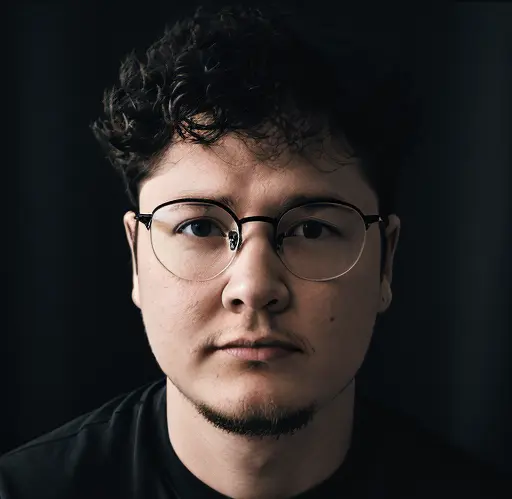
Taylor Rupe
B.A. Psychology | Editor & Researcher
Taylor holds a B.A. in Psychology, giving him a strong foundation in human behavior, motivation, and the science behind personal development. He applies this background to evaluate coaching methodologies, certification standards, and career outcomes — ensuring every article on this site is grounded in evidence rather than industry hype.