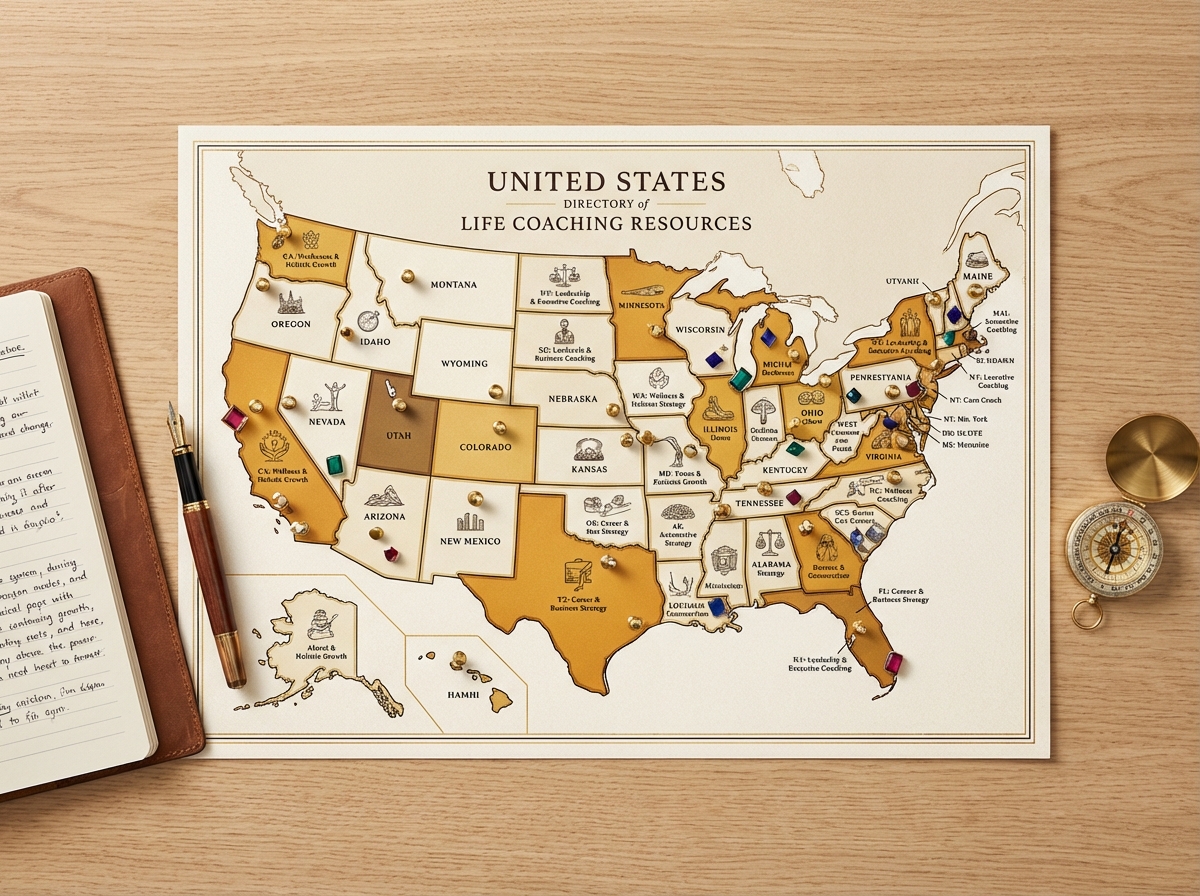
- 1.No state requires a license to practice life coaching — certification is voluntary but strongly recommended for credibility and earning potential
- 2.Salary varies significantly by location — coaches in high-cost metros (NYC, SF, LA) earn 30-50% more than the national average of $71,719/year
- 3.ICF-accredited training programs are available online nationwide, though some states have more in-person options than others
- 4.State-specific considerations include business registration requirements, liability insurance, and local market demand for your specialization
Find Your State
Showing all 50 states
Quick Links — All 50 States
Why Your State Matters
Life coaching is unregulated at the state level — you don't need a state license to call yourself a coach or take clients. This is true in all 50 states. But that doesn't mean location is irrelevant.
Market demand varies. States with more corporate headquarters, tech companies, and high-income professionals have stronger demand for executive and leadership coaching. States with strong healthcare systems have more opportunities for health coaching.
Income varies by region. A coach in San Francisco or New York can charge significantly more than one in a lower-cost market. But with virtual coaching now the norm, many coaches serve clients across state lines.
Business requirements differ. LLC filing fees, business license requirements, and tax obligations vary by state. Some states require additional registrations for home-based businesses.
State Regulation of Life Coaching
As of 2026, no U.S. state requires a license specifically for life coaching. However, coaches must be careful not to cross into regulated practice areas:
Therapy and counseling are licensed in every state. If a client needs mental health treatment, coaches must refer to a licensed professional. The distinction between coaching (goal-focused, forward-looking) and therapy (treating diagnosable mental health conditions) must be clear.
Financial advising is regulated by the SEC and state securities boards. Financial coaches can help with budgeting and money habits but cannot provide investment advice or manage assets.
Nutrition advice is regulated in some states. Nutrition coaches should focus on behavior change and general wellness, not medical nutrition therapy (which requires a Registered Dietitian credential).
For a complete overview of what you can and can't do without a license, see our requirements guide and coaching vs. therapy comparison.

Professional Life Coach Certification
Foundational coaching certification covering methods, tools, and industry best practices.
- Transformational coaching methods
- Client session frameworks
- Business launch resources
Save thousands compared to traditional programs
Affiliate link · We may earn a commission at no extra cost to you
States with the Strongest Coaching Markets
While coaches can work from anywhere (thanks to virtual coaching), some states have notably stronger local markets:
California — the largest coaching market in the U.S. Strong demand in tech (Silicon Valley executive coaching), entertainment (career coaching), and wellness (health coaching in LA). Multiple ICF-accredited in-person programs.
New York — high demand for executive and leadership coaching in financial services, media, and corporate sectors. NYC coaches command premium rates. Strong organizational coaching market.
Texas — growing corporate presence (Austin tech, Houston energy, Dallas finance) driving demand for leadership and business coaching. Lower cost of living means wider profit margins for coaches.
Florida — strong market for health/wellness coaching, career transition coaching (retiree population), and leadership coaching (growing corporate sector).
Illinois — Chicago's corporate market drives demand for executive and leadership coaching. Strong healthcare sector supports health coaching opportunities.
Colorado — wellness-focused culture creates strong demand for health, fitness, and life purpose coaching. Boulder and Denver have active coaching communities.
Virtual Coaching: Location Independence
The 2025 ICF Global Coaching Study confirms that virtual coaching is now the dominant format. This means your physical location matters less than it used to:
You can serve clients anywhere. A coach in Oklahoma can serve executive clients in New York. A coach in Montana can specialize in tech leadership coaching for Silicon Valley managers. Your niche and marketing matter more than your zip code.
Your state still affects your business. Even if clients are nationwide, your LLC registration, business taxes, and liability insurance are governed by your home state. Some states (Wyoming, Delaware, Nevada) are popular for LLC formation due to favorable business laws.
For practical guidance on business setup, see our coaching business guide.
Browse Coaching Certifications
SponsoredAll certifications $197 · Self-paced · CPD accredited
Professional Life Coach Certification
Foundational coaching certification covering methods, tools, and industry best practices.

Career Coach Certification
Guide professionals through career transitions, branding, and long-term strategies.

Health Coach Certification
Holistic nutrition and exercise principles for long-term client well-being.

Spiritual Life Coach Certification
Help clients build a spiritual foundation, deepen self-awareness, and live with purpose.

Christian Life Coach Certification
Coaching certification integrating biblical principles for spiritual growth.

NLP Coach Certification
Leverage NLP techniques to reprogram the subconscious for lasting transformation.

Grief Coach Certification
Help clients navigate loss with compassion and evidence-based support.

Sobriety Life Coach Certification
Support individuals in creating lasting change and a substance-free lifestyle.
Affiliate link · We may earn a commission at no extra cost to you
Finding Training Programs
ICF-accredited training programs are available in multiple formats:
Fully online, self-paced — available from anywhere. Programs like iNLP Center and Coach Transformation Academy let you learn on your own schedule.
Virtual live — online but with scheduled group sessions. Programs like CTI and iPEC offer live virtual cohorts with real-time interaction.
In-person — concentrated programs in major cities. Often intensive weekend formats. Best for hands-on learners who want face-to-face practice.
University-based — some universities offer coaching certificates through their continuing education divisions. These can be particularly valuable if you value the institutional name on your credential.
For a complete comparison, see our online certification programs guide.
Frequently Asked Questions

Taylor Rupe
B.A. Psychology | Editor & Researcher
Taylor holds a B.A. in Psychology, giving him a strong foundation in human behavior, motivation, and the science behind personal development. He applies this background to evaluate coaching methodologies, certification standards, and career outcomes — ensuring every article on this site is grounded in evidence rather than industry hype.