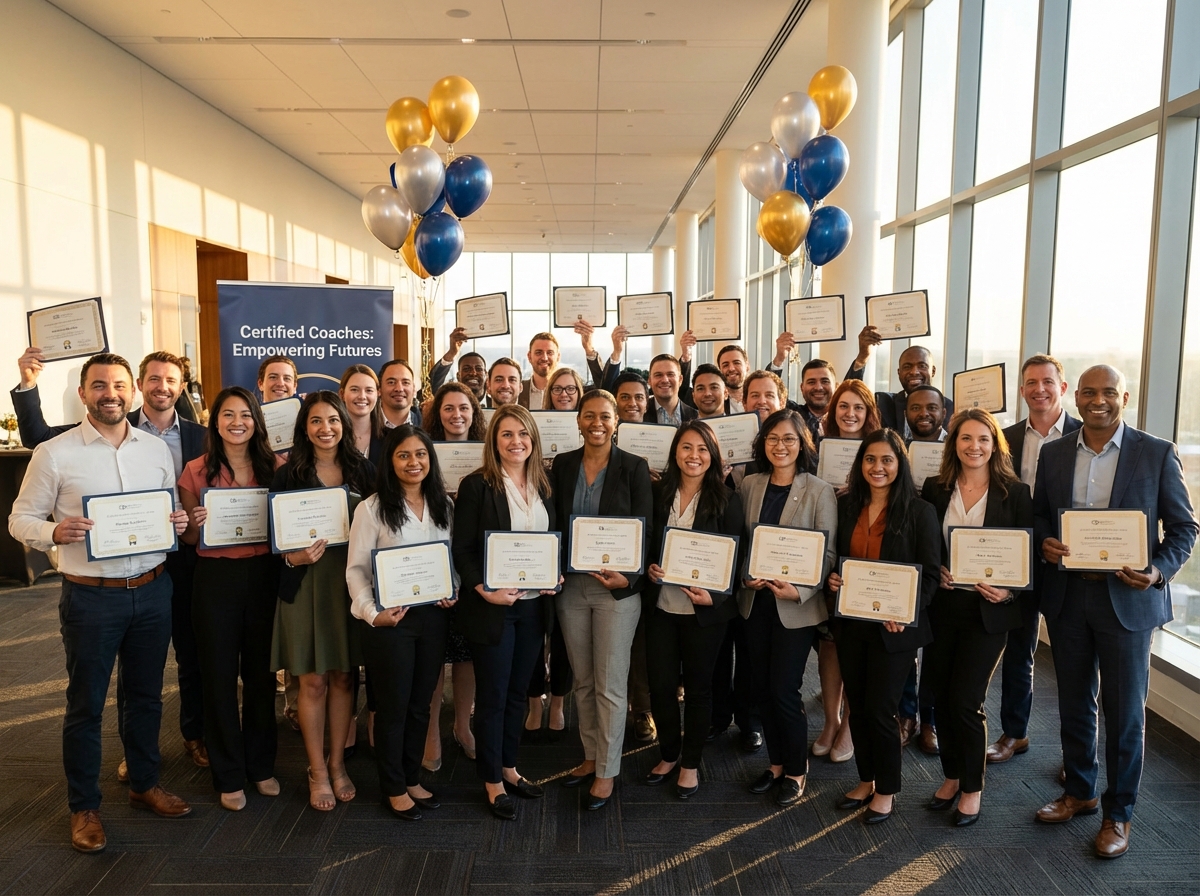
- 1.Life coach certification is not legally required in Vermont — life coach certification is voluntary but recommended for credibility in the state's wellness-oriented market
- 2.Life coaches in Vermont earn an average of $52,600/yr, near the $54,000 national average, though the higher cost of living (115.9) requires strong client bases
- 3.No dedicated in-state ICF-accredited programs, but ANHCO offers health and life coaching certification for Vermont residents, plus multiple national online programs
- 4.Top markets: Burlington, South Burlington, Montpelier, Brattleboro

Professional Life Coach Certification
Foundational coaching certification covering methods, tools, and industry best practices.

Life Purpose Coach Certification
Help clients uncover purpose, align actions with values, and create meaningful lives.

Confidence Coach Certification
Help clients develop unshakable self-trust and overcome self-doubt.

NLP Coach Certification
Leverage NLP techniques to reprogram the subconscious for lasting transformation.
Affiliate link · We may earn a commission at no extra cost to you
Life Coach Training & Certification Overview: Vermont
Vermont is the second-least-populous state (roughly 650,000 residents), but its culture is exceptionally receptive to coaching and personal development. The state ranks highly for quality of life, environmental consciousness, and progressive community values — all of which align with wellness and life coaching.
The economy centers on healthcare (University of Vermont Medical Center), technology (Burlington's growing tech sector), tourism (ski resorts, fall foliage), agriculture (notably the dairy and craft food industries), and higher education (UVM, Middlebury College, Bennington College). Vermont's strong remote-work adoption — accelerated since 2020 — means many professionals work for out-of-state companies while living in Vermont.
While the small population limits the local market, many Vermont coaches build virtual practices that serve clients nationwide. Vermont's reputation for wellness and mindfulness gives coaches here a natural positioning advantage.
$52,600/yr
Avg. Coach Salary
115.9
Cost of Living
vs. 100 national avg
$125
LLC Filing Fee
3.35%-8.75%
Income Tax
Burlington
Top City
Do You Need a Life Coach Certification in Vermont?
Vermont does not require a license or certification to practice life coaching. However, Vermont's health-conscious, educated population tends to research credentials carefully, so certification from the ICF or NBHWC adds meaningful credibility.
ICF offers three credential levels — ACC, PCC, and MCC — each requiring progressively more training hours and coaching experience. For health and wellness coaching specifically, the NBHWC credential is also valued. For a full comparison, see our certification guide.
| ICF-ACC | ICF-PCC | ICF-MCC | |
|---|---|---|---|
| Training Hours | 60+ hours | 125+ hours | 200+ hours |
| Coaching Experience | 100+ hours | 500+ hours | 2,500+ hours |
| Typical Cost | $2,000-$6,000 | $5,000-$12,000 | $10,000-$20,000 |
| Timeline | 6-12 months | 1-2 years | 3-5 years |
| Best For | New coaches | Established coaches | Master-level coaches |
Source: ICF Credentialing Requirements 2026
Professional Life Coach Certification
Foundational coaching certification covering methods, tools, and industry best practices.
- Transformational coaching methods
- Client session frameworks
- Business launch resources
Save thousands compared to traditional programs
Affiliate link · We may earn a commission at no extra cost to you
Life Coach Training: Getting Started in Vermont
Vermont's small population means most successful coaches here combine local in-person clients with a virtual practice serving clients nationwide. Burlington's tech community and the state's college towns provide the strongest local markets.
Vermont's brand as a wellness-focused, quality-of-life state gives coaches a natural positioning advantage. Many coaches lean into this identity, offering coaching that integrates mindfulness, outdoor wellness, and sustainable living — themes that resonate with Vermont's culture and attract clients from other states.
5 Steps to Life Coach Certification in Vermont
Choose a Training Program
Enroll in an ICF-accredited program. ANHCO offers health and life coaching certification for Vermont residents. National online programs like iPEC, and Lumia Coaching are also available.
Complete Your Training
Finish at least 60 hours of coach-specific training for ACC certification, or 125+ hours for PCC.
Register Your Business
File an LLC with the Vermont Secretary of State ($125 filing fee, $25/yr annual report). Vermont has a progressive income tax of 3.35%-8.75%.
Get Liability Insurance
Professional liability insurance typically costs $200-$500/yr and protects your coaching practice.
Find Your First Clients
Start in Burlington where the tech community, university, and health-conscious population create the strongest local coaching market. Build a virtual presence to serve clients beyond Vermont.
Life Coach Salary in Vermont
Life coaches in Vermont earn an average of $52,600/yr according to ZipRecruiter. This is near the $54,000 national average, but Vermont's cost of living at 115.9 means expenses are higher.
Executive coaches in the Burlington tech sector can command $150-$350/hr. Health and wellness coaches — particularly those aligned with Vermont's wellness culture — earn $75-$150/hr. Building a virtual practice that serves clients in higher-income markets can significantly boost earning potential.
For a detailed breakdown of coaching income by specialty and experience level, see our salary guide.
Source: ZipRecruiter, 2025
Setting Up Your Coaching Business in Vermont
Vermont has a supportive small-business environment, though the cost of living and tax rates are higher than many other states. The state's progressive income tax ranges from 3.35% to 8.75%.
LLC Formation: File with the Vermont Secretary of State for $125. Annual report fees are $25/yr.
Insurance: Professional liability insurance runs $200-$500/yr and is recommended even though it's not legally required.
Taxes: Vermont has a progressive income tax ranging from 3.35% to 8.75%. Combined with federal self-employment taxes (15.3%), the tax burden is higher than average. However, Vermont offers various small business deductions and credits. See our business setup guide.
| Sole Proprietorship | LLC in Vermont | |
|---|---|---|
| Formation Cost | $0-$50 | $125 |
| Annual Fees | None | $25/yr |
| Liability | Unlimited | Limited |
| Taxes | Personal | Pass-through |
| Credibility | Informal | Professional |
| Best For | Testing the waters | Serious practice |
Source: Vermont SOS, 2026
Traditional ICF Programs
- Cost: $3,000–$15,000
- Duration: 6–12 months
- Schedule: Fixed class times
- Location: In-person or scheduled live
Transformation Academy
- Cost: $197
- Duration: Self-paced
- Schedule: Start anytime
- Location: 100% online
Affiliate link · We may earn a commission at no extra cost to you
Life Coach Training Programs in Vermont
Vermont does not have dedicated in-state ICF-accredited coaching schools, but ANHCO (American Naturopathic Health Coaching Organization) offers a health and life coaching certification tailored for Vermont residents. Vermont's telehealth adoption makes online training programs a natural fit.
National ICF-accredited programs available online include iPEC, and Lumia Coaching. For a full list, see our online certification guide.
In-Demand Specializations in Vermont
Vermont's culture creates distinctive coaching niches. Health and wellness coaching aligns with the state's emphasis on organic food, outdoor recreation, and mindful living. Burlington's tech sector drives demand for career coaching and startup coaching.
The state's college towns (Middlebury, Bennington, Burlington) support academic career coaching. Vermont's aging population creates opportunities for life transition coaching, while the farm-to-table movement and craft economy (craft beer, artisanal food) support entrepreneurship and small-business coaching. See our full specializations guide.
Life Coach Training by City in Vermont
Explore coaching markets across Vermont
How to Become a Life Coach in Burlington, Vermont
Vermont's largest city and economic epicenter, Burlington combines the University of Vermont and UVM Medical Center as its largest employers with a growing technology sector featuring GlobalFoundries, Burton, and innovative startups like BETA Technologies. The city's progressive culture and wellness orientation create strong demand for coaching services.
Coaching Market
Burlington is the undisputed economic and cultural center of Vermont, with a downtown district that alone accounts for 9,000 workers and serves as the state's second-largest employment area. The University of Vermont (3,777 employees) and UVM Medical Center (formerly Fletcher Allen Health Care, 4,835 employees) together form the city's dominant employer, creating coaching demand across academic leadership, physician career development, clinical burnout prevention, and healthcare administration coaching.
The technology sector has emerged as a significant economic force. GlobalFoundries, one of the world's largest semiconductor manufacturers, maintains a major facility in nearby Essex Junction. Burton Snowboards, the iconic winter sports brand founded in Burlington, and Dealer.com (now part of Cox Automotive) represent the city's blend of outdoor culture and technology innovation. Fast-growing companies including BETA Technologies (electric aviation), OnLogic (industrial computing), and Resonant Link (wireless power) bring startup energy and executive coaching demand to the metro area.
Tourism is the area's second-largest industry, with Burlington's Church Street Marketplace, waterfront, and proximity to ski resorts drawing visitors year-round. The creative economy, encompassing arts organizations, small publishers, and independent retailers, provides a client base for coaches specializing in creative career development and small business coaching. Coaches in Burlington also serve clients in South Burlington, Winooski, Essex Junction, Colchester, and Shelburne, effectively operating across a compact metro area where most communities are within a 15-minute drive. The manufacturing sector, though declining from 15.3% of jobs in 1980 to 7.5% today, still includes hundreds of small manufacturers that benefit from business coaching.
Training Programs
- Co-Active Training Institute — ICF Level 2 accredited
- iPEC — ICF-accredited, online format
Burlington coaches access training primarily through online ICF-accredited programs, as Vermont does not have a locally based ICF-accredited school. The Co-Active Training Institute provides Level 2 ICF-accredited training with periodic intensive workshops in Boston, approximately three and a half hours south, offering the closest in-person training option for Burlington coaches.
iPEC, with over 20 years of ICF accreditation, offers fully online training that accommodates Burlington professionals across healthcare, technology, and education sectors. The International Coach Academy provides globally accessible ICF-accredited e-learning that works well for Vermont coaches who want to train outside of traditional U.S. business hours. The Coaching Center of Vermont, based locally, offers co-active coaching services and may provide informal mentoring and practice opportunities for aspiring coaches.
The University of Vermont's Continuing and Distance Education programs provide complementary professional development in leadership, organizational behavior, and counseling that can strengthen a coaching practice's knowledge base. Coaches in South Burlington, Winooski, Essex Junction, and Colchester access the same training pipeline, and Burlington's college-town concentration of educated professionals makes it easy to find practice partners and study groups. The ICF New England chapter provides continuing education events accessible to Vermont coaches, offering ICF CCE credits to supplement formal training.
Networking & Community
- ICF New England — Professional coaching network
- Lake Champlain Regional Chamber of Commerce — Business networking
ICF New England (ICFNE) is the regional chapter serving Vermont alongside Maine, Massachusetts, New Hampshire, and Rhode Island. As the 11th largest of 147 global ICF chapters with over 900 members, ICFNE provides substantial programming including virtual meetings approximately ten times per year, webinars, Communities of Practice calls, conferences, and networking events with peers and industry leaders. The chapter has hosted specific "ICF Near You: Vermont Edition" events, demonstrating attention to the Vermont coaching community within the broader New England chapter.
The Lake Champlain Regional Chamber of Commerce is Burlington's primary business networking organization, connecting coaches with employers across healthcare, technology, manufacturing, and tourism. The chamber's events and member directory provide visibility among the HR professionals and business owners who purchase coaching services. The Greater Burlington Industrial Corporation (GBIC) supports economic development and can connect coaches with growing companies that need leadership coaching for expanding management teams.
Burlington's progressive, wellness-oriented culture supports a rich ecosystem of networking opportunities through yoga studios, meditation centers, wellness cooperatives, and personal development workshops. The Church Street Marketplace serves as an informal networking hub where the city's tight-knit professional community intersects regularly. Coaches serving the broader Chittenden County area, including clients in South Burlington, Winooski, Essex Junction, Colchester, and Shelburne, benefit from Burlington's compact geography where a single networking presence effectively reaches the entire metro area.
Business Considerations
Session Rates
$100–$275/hr (exec: $200–$425)
Office Rent
$20–$25/sq ft
Vermont requires a $125 LLC filing fee with a $25 annual report fee, making formation affordable. However, Vermont does levy a state income tax with rates ranging from 3.35% to 8.75%, which coaches must factor into their financial planning. The state's cost of living at 115.9% of the national average is the highest among the states covered here, driven by housing costs and Vermont's overall small-market economy.
Office space in Burlington averages approximately $20 to $25 per square foot annually, with newer downtown buildings and Church Street Marketplace locations commanding $25 to $38 per square foot. South Burlington offers comparable space at slightly lower rates. Coworking spaces, including BurlingtonWorks in the downtown area, provide professional office space and meeting rooms at rates that help new coaches manage overhead while building their client base.
Session rates in Burlington typically range from $100 to $275 for life coaching, with executive coaching for technology and healthcare leaders commanding $200 to $425 per session. The higher cost of living supports higher session rates than most small markets, and Burlington's educated, wellness-oriented population is accustomed to investing in personal development. Vermont's regulatory environment does not require specific certification or licensure to practice life coaching, though ICF credentials enhance credibility in this education-conscious market. For coaches comparing Burlington to other Vermont communities, the city offers the deepest client pool and highest session rates, balanced against the state's highest overhead. Coaches in South Burlington and Essex Junction can access Burlington's client base while keeping costs slightly lower.
Life Coach Training Locations in Vermont
How to Become a Life Coach in Burlington, Vermont
Vermont's largest city and economic epicenter, Burlington combines the University of Vermont and UVM Medical Center as its largest employers with a growing technology sector featuring GlobalFoundries, Burton, and innovative startups like BETA Technologies. The city's progressive culture and wellness orientation create strong demand for coaching services.
Coaching Market — Burlington, Vermont
Burlington is the undisputed economic and cultural center of Vermont, with a downtown district that alone accounts for 9,000 workers and serves as the state's second-largest employment area. The University of Vermont (3,777 employees) and UVM Medical Center (formerly Fletcher Allen Health Care, 4,835 employees) together form the city's dominant employer, creating coaching demand across academic leadership, physician career development, clinical burnout prevention, and healthcare administration coaching. The technology sector has emerged as a significant economic force. GlobalFoundries, one of the world's largest semiconductor manufacturers, maintains a major facility in nearby Essex Junction. Burton Snowboards, the iconic winter sports brand founded in Burlington, and Dealer.com (now part of Cox Automotive) represent the city's blend of outdoor culture and technology innovation. Fast-growing companies including BETA Technologies (electric aviation), OnLogic (industrial computing), and Resonant Link (wireless power) bring startup energy and executive coaching demand to the metro area. Tourism is the area's second-largest industry, with Burlington's Church Street Marketplace, waterfront, and proximity to ski resorts drawing visitors year-round. The creative economy, encompassing arts organizations, small publishers, and independent retailers, provides a client base for coaches specializing in creative career development and small business coaching. Coaches in Burlington also serve clients in South Burlington, Winooski, Essex Junction, Colchester, and Shelburne, effectively operating across a compact metro area where most communities are within a 15-minute drive. The manufacturing sector, though declining from 15.3% of jobs in 1980 to 7.5% today, still includes hundreds of small manufacturers that benefit from business coaching.
Training Programs — Burlington, Vermont
Burlington coaches access training primarily through online ICF-accredited programs, as Vermont does not have a locally based ICF-accredited school. The <a href="https://coactive.com/" rel="noopener" target="_blank">Co-Active Training Institute</a> provides Level 2 ICF-accredited training with periodic intensive workshops in Boston, approximately three and a half hours south, offering the closest in-person training option for Burlington coaches. iPEC, with over 20 years of ICF accreditation, offers fully online training that accommodates Burlington professionals across healthcare, technology, and education sectors. The International Coach Academy provides globally accessible ICF-accredited e-learning that works well for Vermont coaches who want to train outside of traditional U.S. business hours. The Coaching Center of Vermont, based locally, offers co-active coaching services and may provide informal mentoring and practice opportunities for aspiring coaches. The University of Vermont's Continuing and Distance Education programs provide complementary professional development in leadership, organizational behavior, and counseling that can strengthen a coaching practice's knowledge base. Coaches in South Burlington, Winooski, Essex Junction, and Colchester access the same training pipeline, and Burlington's college-town concentration of educated professionals makes it easy to find practice partners and study groups. The <a href="https://icfne.org/" rel="noopener" target="_blank">ICF New England</a> chapter provides continuing education events accessible to Vermont coaches, offering ICF CCE credits to supplement formal training.
Networking & Community — Burlington, Vermont
ICF New England (ICFNE) is the regional chapter serving Vermont alongside Maine, Massachusetts, New Hampshire, and Rhode Island. As the 11th largest of 147 global ICF chapters with over 900 members, ICFNE provides substantial programming including virtual meetings approximately ten times per year, webinars, Communities of Practice calls, conferences, and networking events with peers and industry leaders. The chapter has hosted specific "ICF Near You: Vermont Edition" events, demonstrating attention to the Vermont coaching community within the broader New England chapter. The Lake Champlain Regional Chamber of Commerce is Burlington's primary business networking organization, connecting coaches with employers across healthcare, technology, manufacturing, and tourism. The chamber's events and member directory provide visibility among the HR professionals and business owners who purchase coaching services. The Greater Burlington Industrial Corporation (GBIC) supports economic development and can connect coaches with growing companies that need leadership coaching for expanding management teams. Burlington's progressive, wellness-oriented culture supports a rich ecosystem of networking opportunities through yoga studios, meditation centers, wellness cooperatives, and personal development workshops. The Church Street Marketplace serves as an informal networking hub where the city's tight-knit professional community intersects regularly. Coaches serving the broader Chittenden County area, including clients in South Burlington, Winooski, Essex Junction, Colchester, and Shelburne, benefit from Burlington's compact geography where a single networking presence effectively reaches the entire metro area.
Business Considerations — Burlington, Vermont
Vermont requires a $125 LLC filing fee with a $25 annual report fee, making formation affordable. However, Vermont does levy a state income tax with rates ranging from 3.35% to 8.75%, which coaches must factor into their financial planning. The state's cost of living at 115.9% of the national average is the highest among the states covered here, driven by housing costs and Vermont's overall small-market economy. Office space in Burlington averages approximately $20 to $25 per square foot annually, with newer downtown buildings and Church Street Marketplace locations commanding $25 to $38 per square foot. South Burlington offers comparable space at slightly lower rates. Coworking spaces, including BurlingtonWorks in the downtown area, provide professional office space and meeting rooms at rates that help new coaches manage overhead while building their client base. Session rates in Burlington typically range from $100 to $275 for life coaching, with executive coaching for technology and healthcare leaders commanding $200 to $425 per session. The higher cost of living supports higher session rates than most small markets, and Burlington's educated, wellness-oriented population is accustomed to investing in personal development. Vermont's regulatory environment does not require specific certification or licensure to practice life coaching, though ICF credentials enhance credibility in this education-conscious market. For coaches comparing Burlington to other Vermont communities, the city offers the deepest client pool and highest session rates, balanced against the state's highest overhead. Coaches in South Burlington and Essex Junction can access Burlington's client base while keeping costs slightly lower.
How to Become a Life Coach in Rutland, Vermont
Vermont's second-largest health care hub and a historic center of the American marble and granite industry, Rutland serves as the commercial center for central-western Vermont with a diverse employer base including GE Aviation, Casella Waste Systems headquarters, and Rutland Regional Medical Center.
Coaching Market — Rutland, Vermont
Rutland serves as the economic hub for central-western Vermont, with a compact but diverse employer base that generates coaching demand across healthcare, manufacturing, and professional services. Rutland Regional Medical Center, Vermont's second-largest health care facility with 188 inpatient beds and 120 physicians, is the city's anchor employer, creating opportunities for physician coaching, nurse leadership development, and healthcare administration coaching. General Electric Aviation maintains a significant operation in the area, bringing precision manufacturing professionals who benefit from leadership and career coaching. Casella Waste Systems, headquartered in Rutland, is the area's second-largest private employer with 583 headquarters employees, providing corporate coaching opportunities at the management and executive levels. Green Mountain Power, one of Vermont's primary utilities, maintains operations that create additional professional coaching clients. The historic marble and granite industry, though reduced from its peak, continues through companies like OMYA and specialty stone firms, along with a network of quarrying and fabrication businesses that represent small business coaching opportunities. Coaches in Rutland also serve clients in Killington, Woodstock, Ludlow, Manchester, and the broader Rutland County communities. The proximity to Killington Resort and other ski areas means the tourism and hospitality workforce swells seasonally, creating demand for hospitality leadership coaching and seasonal stress management. The Rutland Economic Development Corporation's revolving loan fund, offering $5,000 to $75,000 loans for new and expanding businesses, signals an active entrepreneurial community that can benefit from business coaching. More than 20 trucking firms in the area support the logistics sector, and the regional trade center role means professionals from surrounding communities regularly travel to Rutland for services.
Training Programs — Rutland, Vermont
Rutland coaches access training through online ICF-accredited programs, as there are no locally based coaching schools. The Co-Active Training Institute offers Level 2 ICF-accredited training accessible online or through periodic intensives in Boston, approximately three hours east. iPEC and the International Coach Academy provide additional fully online ICF-accredited options. The proximity to Burlington, approximately 65 miles north, means Rutland coaches can participate in Burlington-based coaching events, study groups, and networking without prohibitive travel. The ICF New England chapter's virtual programming, including approximately ten meetings per year, is fully accessible from Rutland and provides continuing education opportunities that supplement formal training. Rutland's Community College of Vermont campus and the broader educational community provide professional development resources that complement coaching credentials. Coaches in Killington, Woodstock, Ludlow, and Manchester access the same online training options, and the resort community connections can lead to informal mentoring relationships with coaches serving the tourism and hospitality market. The small-market reality means Rutland coaches who invest in comprehensive ICF credentials stand out more sharply than credentialed coaches in larger, more competitive markets.
Networking & Community — Rutland, Vermont
ICF New England (ICFNE) serves Rutland coaches as part of its five-state regional chapter with over 900 members. The chapter's virtual meetings, Communities of Practice, conferences, and networking events are equally accessible from Rutland as from Boston or Burlington, making ICFNE membership valuable for coaches in smaller Vermont communities. The chapter's specific Vermont-focused events demonstrate recognition that Vermont coaches benefit from region-specific programming. The Rutland Area Chamber of Commerce and the Rutland Economic Development Corporation provide local business networking that connects coaches with the employer base at Rutland Regional Medical Center, GE Aviation, Casella Waste Systems, and Green Mountain Power. The chamber's events and member directory offer visibility in a market where relationships develop quickly due to the community's compact size. The resort and tourism community provides additional networking channels, with Killington Resort, Pico Mountain, and the broader ski industry hosting events and professional gatherings where coaches can connect with hospitality leaders and seasonal business owners. The Green Mountain Chapter of various professional organizations and civic groups like Rotary and Kiwanis provide service-oriented networking where trust builds through community involvement. Coaches serving the broader central-western Vermont region, including clients in Killington, Woodstock, Ludlow, Manchester, and Bennington, benefit from Rutland's position as the regional commercial hub where professional networks naturally converge.
Business Considerations — Rutland, Vermont
Vermont's $125 LLC filing fee and $25 annual renewal keep formation costs moderate. The state income tax, with rates from 3.35% to 8.75%, is a meaningful expense that coaches in neighboring New Hampshire (no income tax) do not face. However, Rutland's cost of living is noticeably lower than Burlington's, with housing and commercial space costs reflecting the smaller-market reality. Office space in Rutland averages $10 to $16 per square foot annually, making it one of the most affordable options in Vermont. The REDC's revolving loan fund, offering $5,000 to $75,000 loans for new and expanding businesses, can help coaches establish physical practice space or invest in training. Coworking options are limited compared to Burlington, but the low cost of private office space makes traditional leases practical for coaches who want dedicated space. Session rates in Rutland typically range from $75 to $200 for life coaching, with executive coaching for healthcare and manufacturing leaders commanding $150 to $350 per session. The smaller market means most successful Rutland coaches build hybrid practices with local clients supplemented by virtual clients across Vermont, New England, or nationally. The resort community creates seasonal income variability, with tourism-connected coaching demand peaking during ski season (November through April) and fall foliage season (September through October). For coaches comparing Rutland to Burlington, the roughly 40% lower overhead is balanced against a smaller local client base, making virtual delivery capability essential for Rutland-based coaches building sustainable practices.
How to Become a Life Coach in Montpelier, Vermont
The smallest state capital in the United States by population, Montpelier punches far above its weight as the center of Vermont's state government, home to National Life Insurance Company, and a hub for the creative economy. Despite just 7,900 residents, the city provides one-third of the 32,000 jobs in the Central Vermont region.
Coaching Market — Montpelier, Vermont
Montpelier's coaching market is shaped by its outsized role as Vermont's state capital and a regional employment center. Despite a resident population of just 7,915, the city provides over one-third of the 32,000 jobs in the Central Vermont region, with average household incomes among the highest in Washington County. The State of Vermont is the single largest employer, with 2,612 workers constituting 29% of the city's total workforce and paying total wages of $133.4 million. This concentration of state government professionals creates a substantial market for leadership coaching, career development coaching, and executive coaching for senior government officials and agency heads. National Life Insurance Company, among the nation's largest insurance providers, maintains its headquarters in Montpelier and is the city's leading private employer. The insurance and financial services professionals at National Life represent coaching clients who benefit from executive development, career planning, and work-life integration coaching. Cabot Creamery Cooperative employs 530 people, and Washington County Mental Health Services adds 480 employees, contributing healthcare and cooperative business professionals to the coaching client base. The creative economy is a distinctive feature of Montpelier's market. Black River Design, the Vermont College of Fine Arts, Lost Nation Theater, and the New England Culinary Institute (500 employees) create a community of artists, educators, and creative professionals who seek coaching around career sustainability, creative business development, and performance excellence. Coaches in Montpelier also serve clients in Barre, Waterbury, Northfield, and Stowe, extending across the Central Vermont region. The nearby ski areas at Sugarbush and Mad River Glen bring tourism and hospitality professionals who benefit from seasonal business coaching.
Training Programs — Montpelier, Vermont
Montpelier coaches access training through online ICF-accredited programs, supplemented by the broader Vermont and New England coaching community. The Co-Active Training Institute and iPEC offer nationally recognized online ICF-accredited training that works well with the schedules of government professionals and creative economy workers. The proximity to Burlington, approximately one hour northwest, provides access to any coaching events, study groups, or training workshops organized in Vermont's largest city. The University of Vermont's Continuing and Distance Education programs are accessible to Montpelier residents seeking complementary professional development in leadership and organizational behavior. The New England Culinary Institute's educational environment, while focused on culinary arts, demonstrates the city's institutional commitment to professional education and training. ICF New England's virtual programming, including approximately ten meetings per year, webinars, and Communities of Practice, is fully accessible from Montpelier. The chapter's Vermont-specific events provide localized continuing education. Coaches in Barre, Waterbury, Northfield, and Stowe access the same training options, and the Central Vermont region's tight-knit professional community makes it easy to organize informal study groups and practice partnerships through government professional networks and creative economy connections.
Networking & Community — Montpelier, Vermont
ICF New England (ICFNE) provides the professional coaching network for Montpelier coaches, with virtual meetings, conferences, and Vermont-focused events accessible from the capital. The chapter's 900-plus membership across five New England states means Montpelier coaches connect with a substantial professional community despite the city's small size. The Montpelier-Barre Chamber of Commerce and the Central Vermont Economic Development Corporation provide local business networking. The state government professional community creates its own networking ecosystem, with state employee associations, department leadership groups, and government professional organizations providing access to the 2,612 state workers based in Montpelier. These government connections can lead to coaching contracts funded through professional development budgets and leadership training allocations. Montpelier's creative economy supports unique networking through arts organizations, galleries, and cultural events. The Vermont College of Fine Arts alumni network, Lost Nation Theater's community, and the annual Green Mountain Film Festival create informal connections with creative professionals who seek coaching. Coaches serving the broader Central Vermont region, including clients in Barre, Waterbury, Northfield, and Stowe, benefit from Montpelier's role as the governmental and cultural center where professional networks naturally converge. The Stowe and Waterbury tourism community provides additional networking channels through resort industry events and hospitality professional gatherings.
Business Considerations — Montpelier, Vermont
Vermont's $125 LLC filing fee and $25 annual renewal apply in Montpelier, with the state income tax of 3.35% to 8.75% a meaningful consideration. The economic stability provided by the state government as the city's primary employer means Montpelier's economy is notably recession-resistant compared to tourism-dependent Vermont communities, providing coaches with a reliable client base regardless of economic conditions. Office space in Montpelier is affordable by Vermont standards, averaging $12 to $18 per square foot annually. The downtown area along State Street and Main Street offers professional space in historic buildings with easy walking access to the Capitol and state offices. Barre, just seven miles southeast, provides comparable space at the lower end of the range. The creative economy has fostered coworking and shared-space arrangements that give coaches flexible, low-cost options for in-person sessions. Session rates in Montpelier typically range from $85 to $225 for life coaching, with executive coaching for state government officials and insurance executives commanding $150 to $375 per session. The government client base is attractive because many state agencies include professional development funding that can be used for coaching services, effectively making the employer the payer rather than the individual. For coaches comparing Montpelier to Burlington, the lower overhead and unique government-centered market create a viable niche for coaches who specialize in public sector leadership, government career development, and creative economy coaching. The small population requires building a virtual practice component to achieve full-time coaching income, but the quality and stability of the local client base provide a strong foundation.
Life Coach Certification in Vermont: FAQs
Continue Your Research
Start Your Life Coach Certification in Vermont
Compare ICF-accredited programs and take the first step toward building your coaching practice.
Sources
Coaching industry revenue, practitioner demographics, and income data
Life coach salary estimates for Vermont
Cost of living comparison data for Vermont
LLC formation requirements and filing fees
Latest Articles

Life Coaching Industry Trends 2026
The coaching industry hit $5.34 billion. Here are the trends shaping 2026 and what they mean for new coaches.

How Much Does Certification Cost?
Complete cost breakdown: ICF-ACC, ICF-PCC, affordable alternatives from $197, and hidden costs nobody mentions.

Can ChatGPT Replace a Life Coach?
AI chatbots vs human coaches: effectiveness, cost, and what the research actually says.

Taylor Rupe
B.A. Psychology | Editor & Researcher
Taylor holds a B.A. in Psychology, giving him a strong foundation in human behavior, motivation, and the science behind personal development. He applies this background to evaluate coaching methodologies, certification standards, and career outcomes — ensuring every article on this site is grounded in evidence rather than industry hype.